N° 14 julio – diciembre 2024. E-ISSN: 2709 – 3689
Artículo de investigación
Dossier: Gobernanza y gestión sostenible
A Comprehensive Review of Peru’s Energy Scenario: Advancing Energy Access, Sustainability, and Policy Implications
Una revisión integral del escenario energético del Perú: Avanzando en el acceso a la energía, la sostenibilidad y las implicaciones políticas
Aaron Omar Colina-Calvo
a Universidad Nacional Mayor de San Marcos, Perú
How to cite: Colina-Calvo, A. O. (2024). A Comprehensive review of Peru’s energy scenario. Revista Kawsaypacha: Sociedad Y Medio Ambiente, (14), D-006. https://doi.org/10.18800/kawsaypacha.202402.D006 |
|
Abstract: Peru is in the race to eliminate poverty, inequality and environmental pollution according to the Sustainable Development Goals (SDGs) by 2030; however, the country faces significant challenges in the energy sector, with limited access to electricity and a heavy dependence on imported wood and fuels. This study explores the Peruvian energy context, focusing on an integrative model based on policies, emissions, challenges and opportunities to ensure the availability of resources and a sustainable framework for development through the evaluation of indicators and impacts within the energy sector. Our findings show that energy consumption in Peru depends on diesel, natural gas, and wood. Despite the country's efforts to advance renewable sources of energy and their potential, their contribution is approximately 5%. In this regard, sustainability policies towards 2030 have been adopted by promoting various initiatives, such as installing off-grid photovoltaic panels, BonoGas tickets or energy efficiency measures. However, the lack of political, economic, social and institutional support for emerging technologies slows down progress according to the proposed model.
Keywords: Renewable energy. Energy access. Sustainability. Energy policies.
Resumen: El Perú está en la carrera por eliminar la pobreza, la desigualdad y la contaminación ambiental según los Objetivos de Desarrollo Sostenible (ODS) al 2030; sin embargo, el país se enfrenta a importantes desafíos en su sector energético, con un acceso limitado a la electricidad y una fuerte dependencia de la madera y los combustibles importados. El presente estudio explora el contexto energético peruano, centrándose en un modelo integrador basado en las políticas, las emisiones, los desafíos y las oportunidades para garantizar la disponibilidad de recursos y un marco sostenible para el desarrollo a través de la evaluación de indicadores y repercusiones dentro del sector energético. Nuestros hallazgos demuestran que el consumo de energía en el Perú depende del diésel, el gas natural y la madera. A pesar de los esfuerzos del país por avanzar en las fuentes renovables y su potencial, su contribución es de aproximadamente el 5%. En este sentido, se han adoptado políticas con miras al 2030 para mejorar la sostenibilidad mediante el impulso de varias iniciativas como la instalación de paneles fotovoltaicos fuera de la red, los tickets BonoGas o medidas de eficiencia energética. Sin embargo, el escaso apoyo político, económico, social e institucional a tecnologías emergentes ralentizan el avance según el modelo propuesto.
Palabras clave: Energías renovables. Acceso energético. Sostenibilidad. Políticas energéticas.
1. Introduction
Energy is one of the main tools that people have in their possession to improve their lives by producing food, security, work, and health (Owusu & Asumadu-Sarkodie, 2016) and ultimately achieve prosperity and development (Gonzáles-Eguino, 2015); notwithstanding, energy accessibility has not been extensively massive. This is paramount in rural areas, where access to electricity and clean fuels is more challenging. Regarding this and many other difficulties worldwide, The United Nations (UN) created 17 Sustainable Development Goals (SDGs) (United Nations, 2015) in 2015, intending to develop a sustainable and promising world for all human beings by 2030 and beyond (Sachs et al., 2019). SDG 7 aims at ensuring access to affordable, reliable, and sustainable energy for humans. It was developed to guarantee universal access to modern energy services, increase the share of renewable energy (RE), expand international cooperation to exchange knowledge on clean sources and energy efficiency and improve infrastructure in developing countries (INEI, 2016; Elavarasan et al., 2021).
The Government has made efforts to improve the energy scenario, such as attracting private investment by conducting auctions to promote RE (OSINERGMIN, 2017b). However, fossil fuels remain important within the energy mix. In the transport sector, oil product imports highlight the need to unlock other fuels, such as biofuels or even electrification of private fleets. In this line, the country has set its National Determined Contribution (NDC) to 208.8 MtCO2eq as unconditional target and 179 MtCO2eq if financing is available. Although more explicit directions are needed, these commitments represent the country's endeavour to reduce greenhouse gas (GHG) emissions.
2. Methodology
2.1 Location and characteristics
Peru is located on the coast of the Pacific Ocean, with a surface of 1.280 million km2 and a coastal extension of 2,400 km. Peru's economy has grown significantly in the 21st century, averaging an annual GDP rate of 7.7% from 2000 to 2021. Moreover, in the fourth quarter of 2023, the economy experienced a 0.4% contraction, attributed to the slowdown in primary sectors and private investment (BCRP, 2024). Regarding demographics, there were 33.035 million inhabitants in 2021 (BCRP, 2022), showing an approximately 0.2% reduction from the previous year. Nonetheless, according to the projection for 2050, population is expected to reach 40 million (INEI, 2019).
2.2 Search strategy and data collection
A thorough search was performed across various databases and sources using a carefully crafted search string to include diverse literature. This search string included terms such as “Peru energy,” “Peru electricity,” “Peruvian energy policy,” “Renewable energy in Peru,” AND “Peru energy access,” OR “Energy sector in Peru,” OR "Peru energy sustainability,” and many others. This research used Google Scholar, Scopus, and authoritative sources, such as the Ministry of Energy and Mining, the Ministry of Environment, the World Bank, and IEA. Only materials published in English or Spanish from 2000 onward were considered for the study, except for the definition of WCED and two
oil-related documents.
2.3 Conceptual model
To assess the Peruvian energy scenario, this article has been structured around 3 main components that guide the energy analysis: energy access, sustainability and policy implications. This model emerges to respond to the challenges of the Peruvian energy system, taking a comprehensive approach, clarifying the current understanding and smoothing the way towards the 2030 goals.
Energy access: This component is analysed through electricity access indicators in urban and rural areas. It looks for current gaps in energy provision and challenges for ensuring equitable energy access in Peru.
Energy sustainability: Sustainability in the energy mix is evaluated through four metrics in different sectors. This component analyses the energy system structure and its impacts on reducing the country's carbon footprint.
Policy implications: This component examines the regulatory framework and policies. Moreover, it looks over the strategies adopted to boost renewable energy adoption and political barriers hindering effective transition.
3. Setting the scene: energy demand and supply scenario
Peru is the third-largest country in the region (Bergmann et al., 2021); it ranks 6th in primary energy consumption, with approximately 335 TWh in 2022 (U.S. Energy Information Administration, 2023).
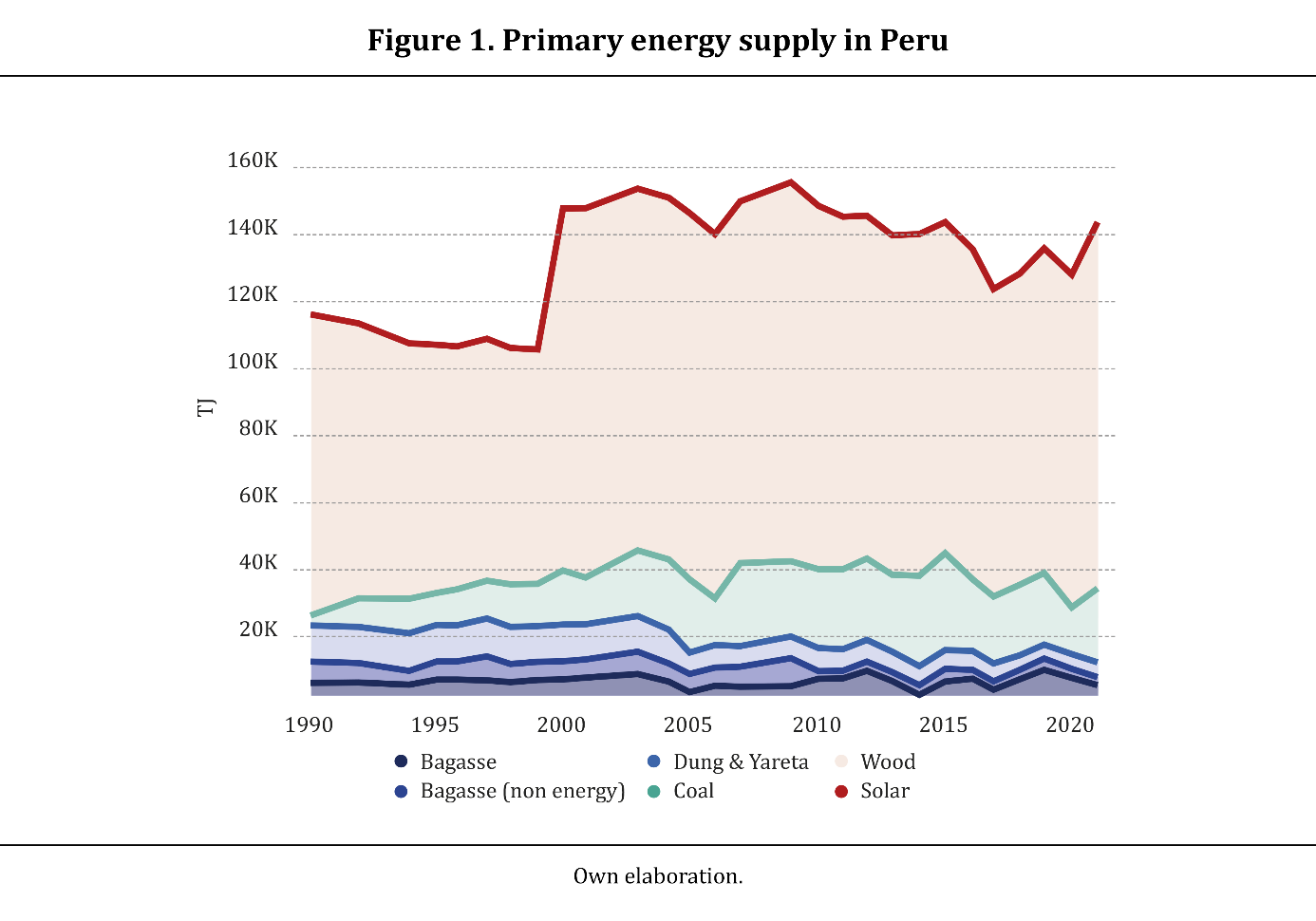
Peru's primary energy supply at the end of 2021 was around 1,002 EJ, i.e. it fell 1.76% compared to 2020. However, it increased 1.56% compared to the beginning of the decade. Natural gas (NG) production experienced dramatic expansion since Camisea's discovery. Mineral coal and wood production grew compared to 2020 (19.1% and 10.1%, respectively). In contrast, wood, bagasse, dung, yareta, wind, and solar energy, all experienced reductions ranging from 0.5% to 9.8% during the same period. Despite these reductions, the combined share of bagasse and hydro energy is noteworthy, reaching approximately 25% in 2021 (Fig. 1).
Historically, energy consumption relied heavily on oil products and wood, with almost 50% of the country's energy coming from diesel, gasoline, and liquefied petroleum gas (LPG) (MINEM, 2023a). Moreover, 28% of rural houses used wood, especially for cooking, in the third quarter of 2022 (INEI, 2023) (Fig. 2). This practice could potentially cause lung health issues (EsSalud, 2017).
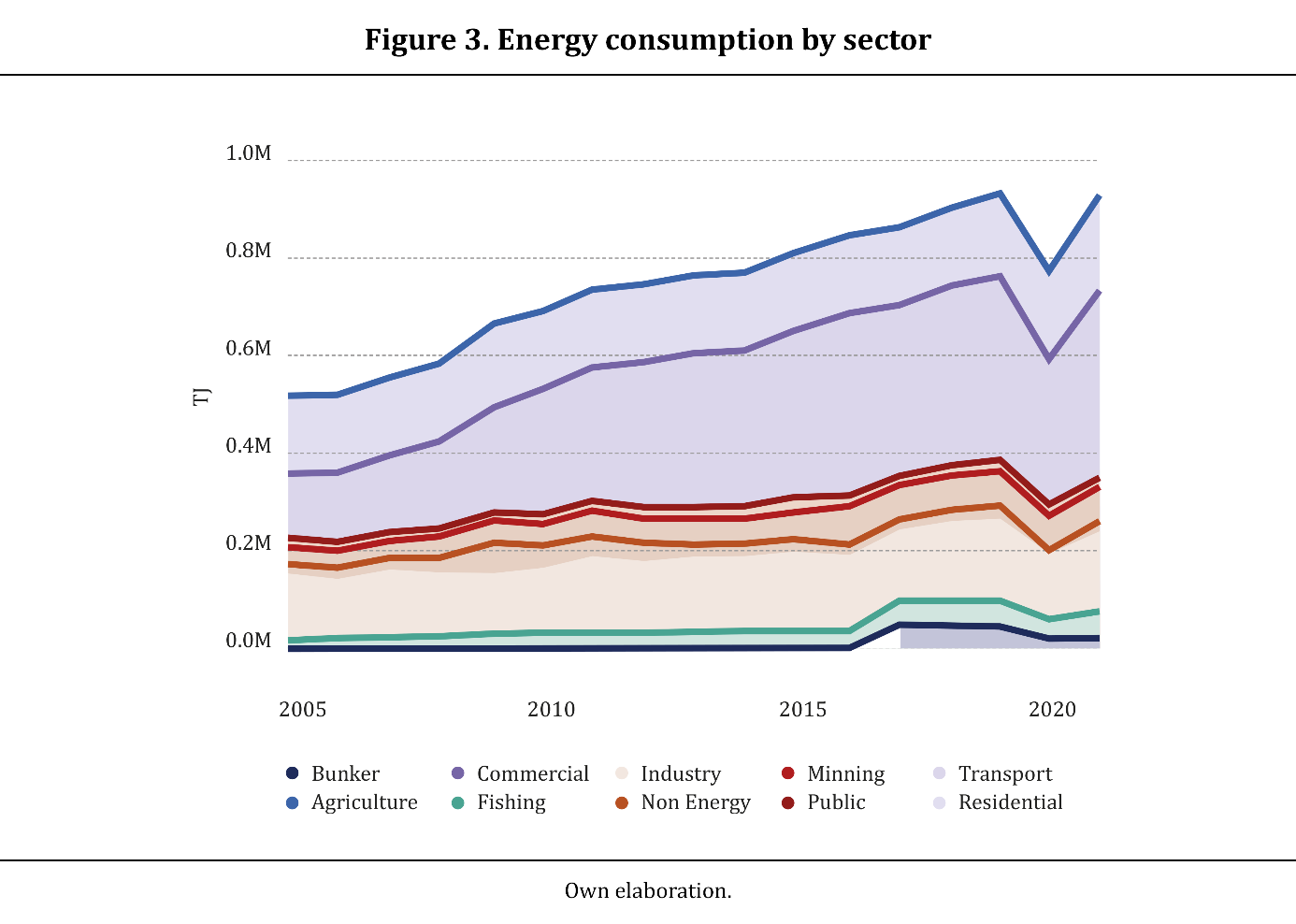
Energy consumption by sector in 2021 (Fig. 3) shows there was a 20.41% increase compared to 2020. However, due to COVID-19, it remained below the average of the last decade at 786,612 TJ. Diesel consumption in transportation accounts for more than half of the total share (53.8%), with road transport as the main consumer of this fuel (almost 98%). NG is strongly used by energy-intensive process industries (53,997 TJ), followed by electricity, which amounted to 44,710 TJ; both sources accounted for over 59% of the fuels used in the sector.
Electricity accounted for approximately 60% of the public sector’s total share. Gasoline experienced a 23-fold increase in fishing compared to 2020, reaching 4,017.8 TJ. The mining sector consumed 23,26.9 TJ of NG, representing 36.7% of the total share; nonetheless, the trend is upward since 2005. Additionally, diesel and electricity comsumption remained essential, reaching 18.4% and 11.8%, respectively. Electricity has been the main energy source in the commercial sector by far since 2005, with values ranging from 10,825 TJ to 24,258 TJ, and experiencing peak consumption in 2009 (17,069.9 TJ). Electricity has been heavily employed by the agriculture sector, exceeding 1,500 TJ since 2010. Alongside diesel and gasoline, they were the main sources of energy in 2022, accounting for nearly 97% (MINEM, 2024).
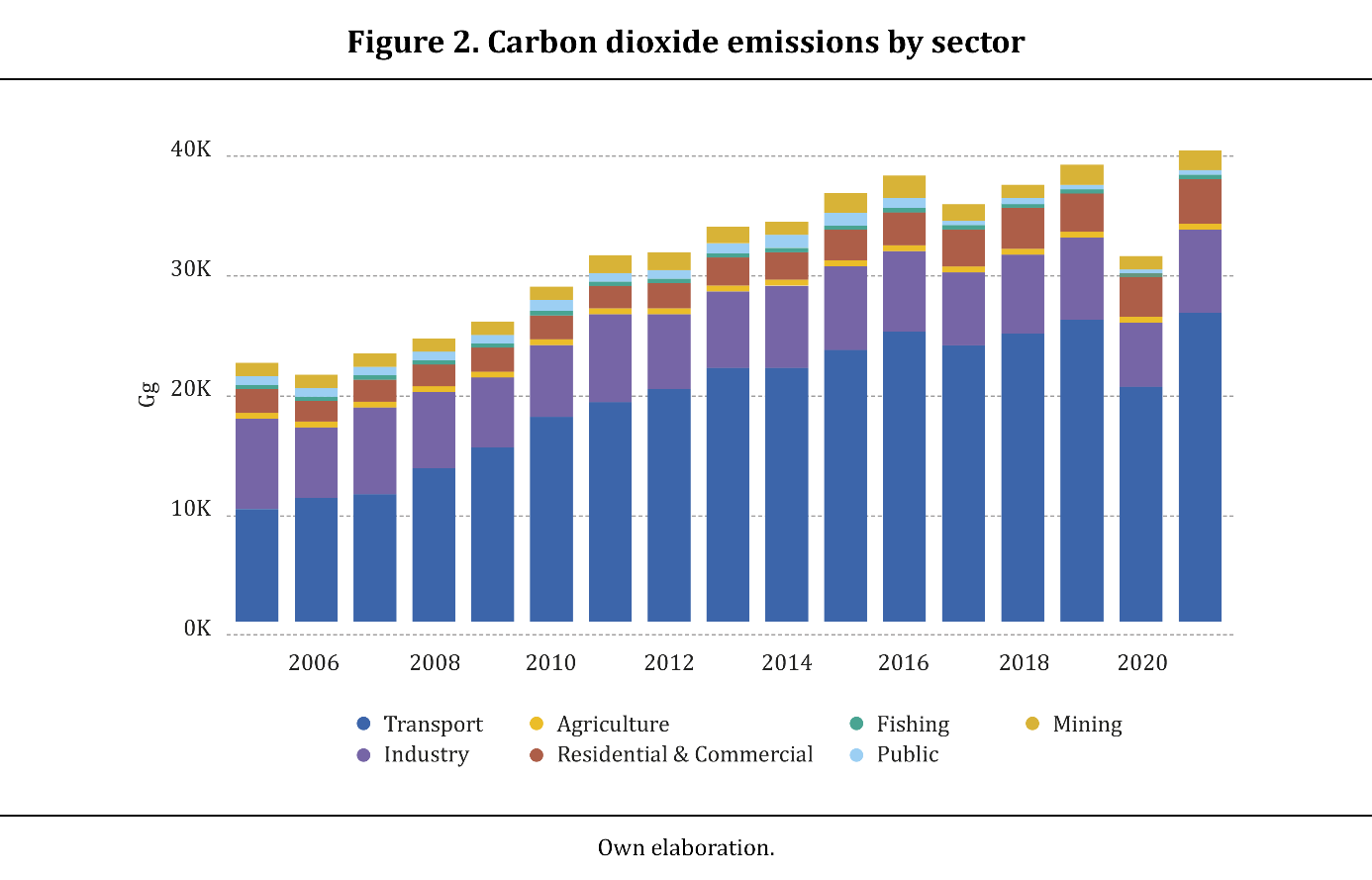
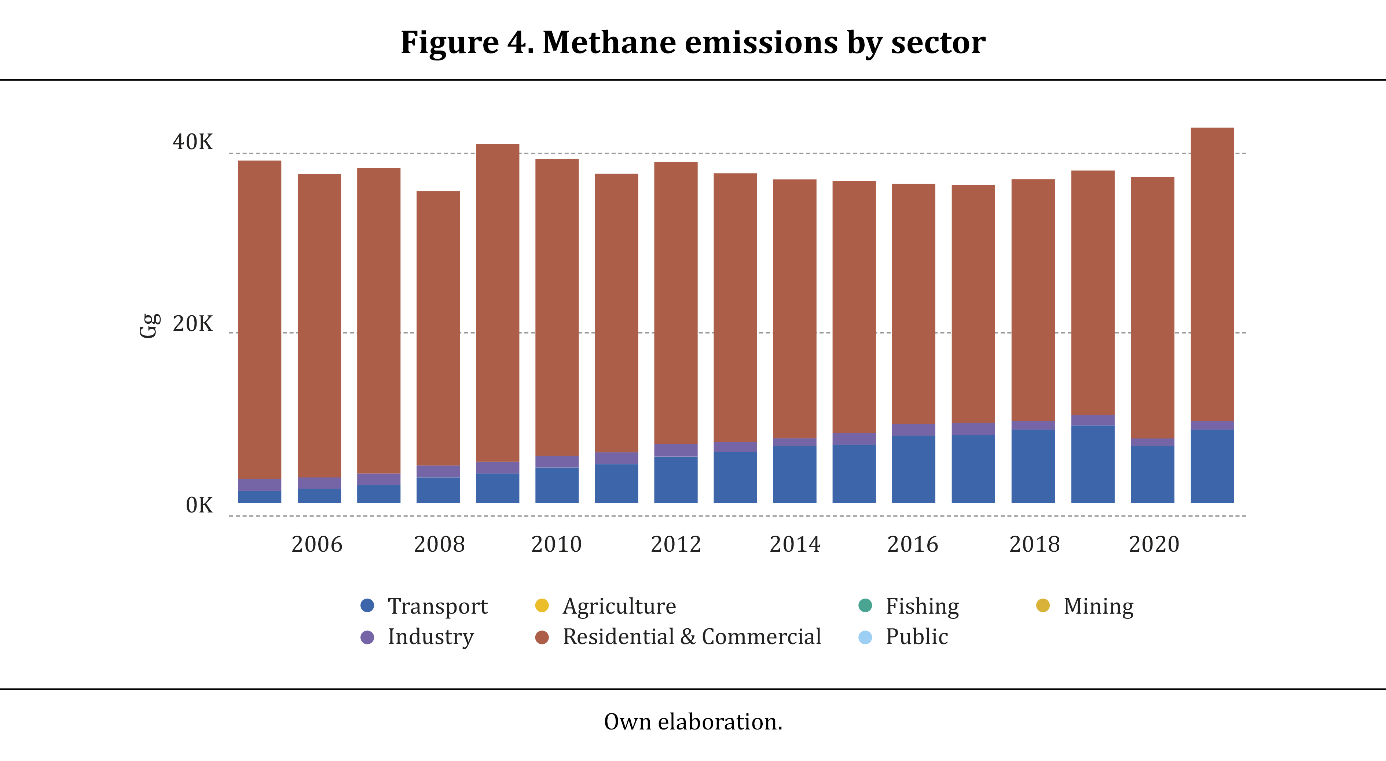
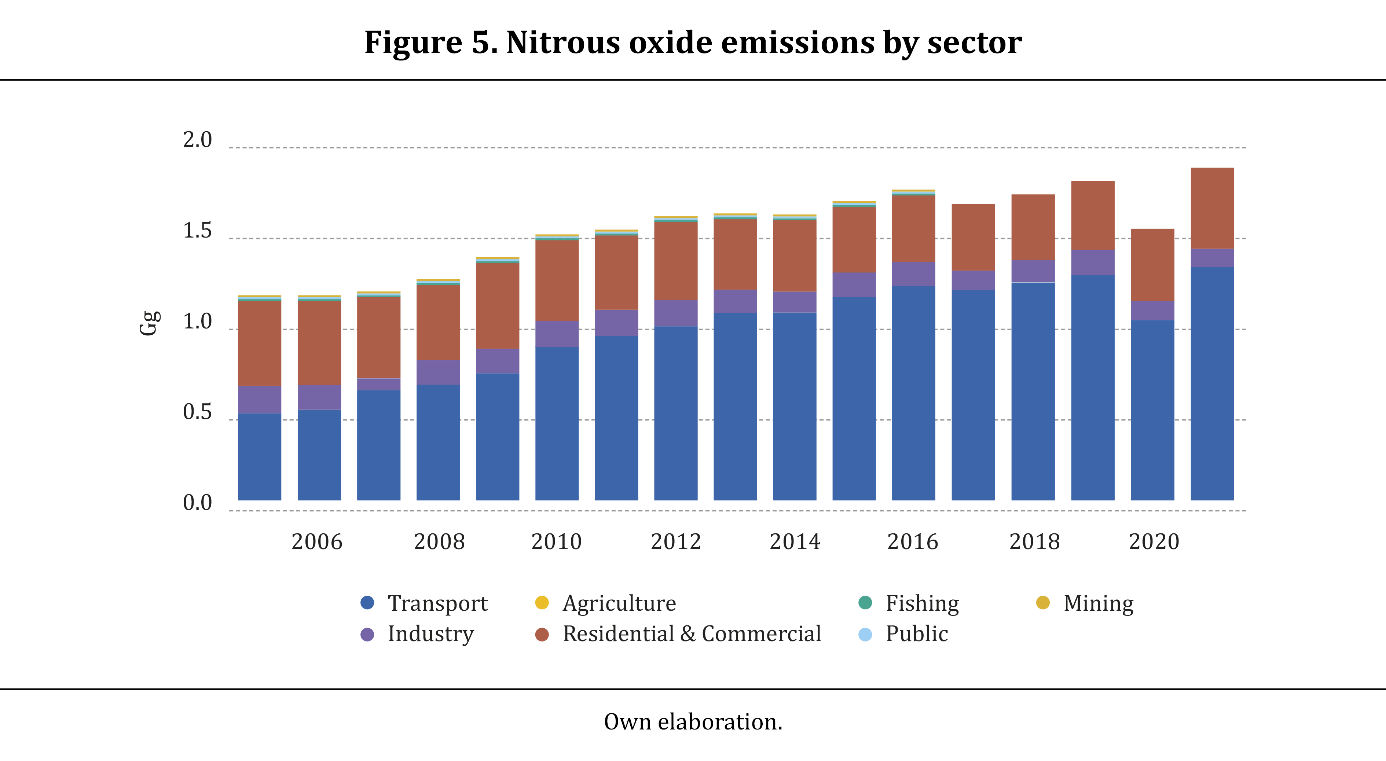
The environmental impacts in 2021 amounted to 39,849.6 Gg of carbon dioxide (GgCO2), 41.47 Gg of methane (GgCH4) and 1.82 Gg of nitrous oxide (GgN2O). Despite the utilisation of new types of fuels, the transport sector has been the most polluting since 2005; albeit, in 2020, emissions were affected by COVID-19. Road transport has been the leading emitter due to the intensive use of diesel (15,349 GgCO2) (MINEM, 2023a). Turbo produced 610.1 GgCO2 in air transport, while maritime and rail transport totalised approximately 700 GgCO2, mainly because of fuel oil and diesel dependence. In agriculture, emissions remained stable until 2020. Nonetheless, in 2021, emissions doubled compared to 2020, reaching 278.3 GgCO2 (Fig. 2). Methane emissions were predominantly attributed to the residential and commercial (R&C) sector, representing 74.5% of total emissions (32.17 GgCH4). The transport sector contributed to nearly one-fifth of total emissions, reporting 8.16 GgCH4 (Fig. 4). Nitrogen emissions are closely linked to the transport and R&C sectors; however, since 2005, emissions from transport have been consistently increasing, while those from R&C sectors have shown the opposite trend, eventually reaching 0.38 kt in 2020 (Fig. 5).
4. Energy sources
4.1 Non-renewable energy
Crude oil: There is a prolific history of oil in the country dating back to the 19th century when the first oil well was discovered in 1863 in Talara, and later in the Brea-Pariñas field (OSINERGMIN, 2015; Pérez-Taiman, 2009). The following century saw the emergence of the International Petroleum Co. Ltd (IPC) and the “Establecimiento Industrial de Petroleo de Zorritos”, followed by Mobil company's discovery of the Aguas Calientes Field in the Amazon in 1939 (Aguirre Madrid & Orihuela Romero, 2014). Petroperu, formerly called “Empresa Petrolera Fiscal”, was created in 1969 following the IPC nationalisation, and produced approximately 62 thousand barrels (Mbbl) per day (Chavez-Rodriguez et al., 2015). In the 1980s, following contract renegotiation by the military Government, there was a heated debate and campaign to promote oil imports spearheaded by the MINEM. In this regard, the deficit in oil production and reserve reduction, along with Petroperu’s lack of technical, economic and administrative capacities to start exploration activities, emphasised the Peruvian short-sightedness concerning this strategic source (Pontoni, 1982). Oil production declined due to limited investments, few field discoveries, negative policy impacts, and low oil prices (Vásquez, 2005; Quijandría, 1993). However, the 1990s saw significant reforms to encourage investment in the hydrocarbon sector (Chavez-Rodriguez et al., 2015). Despite the measures taken, oil production has been contracting since 1994, with a moderate recovery in 2006, 2014 and 2016 (MINEM, 2005; MINEM, 2006; MINEM, 2014; MINEM, 2016a); notwithstanding, the reduction trend persists until 2021 (MINEM, 2023a).
Coal: The first coal mining activities started in 1816 in Cerro de Pasco, with resources coming from the Rancas region (INGENMET, 2000). In the 20th century, coal mining began in Cerro de Pasco, led by the Cerro de Pasco Corp. until the 70s. Centromin Peru S.A. exploited this resource in the next decade until 1993 (Luyo Quiroz, 2011). In the north, the “La Galgada” and “La Limeña” mines began operations primarily for coal exports from 1943 to 1956 (Luyo Quiroz, 2011). Reserves reached 1,054 Mt (INGENMET, 2000). Nowadays, reserves amount to 15.7 Mt. Regarding coal production, there was a 26% increase in 2021, compared to 2020, reaching 144,579 tonnes (t). This commodity is used in thermal power plants, households, industries, and agriculture.
Natural gas: In the 80s, oil production and industry crisis in the country were offset, to a certain degree, by the discovery of the Camisea Field in Cuzco; nevertheless, due to political instabilities, the project took many years to become a reality (OSINERGMIN, 2017c). Before Camisea, only 4% of the electricity consumed was produced using NG; nonetheless, in 2019, its participation increased tenfold (OSINERGMIN, 2021). The NG deposits are located in Aguaytia (Curimaná province, Ucayali), along the coast, and northern Peru (Piura and Tumbes). In 2004, reserves were estimated at 11.5 trillion cubic feet (TCF); by 2013, they had increased to 17.9 TCF. As of 2021, the estimated proven reserves stood at 9,669 TCF, mainly in the southern Amazon area.
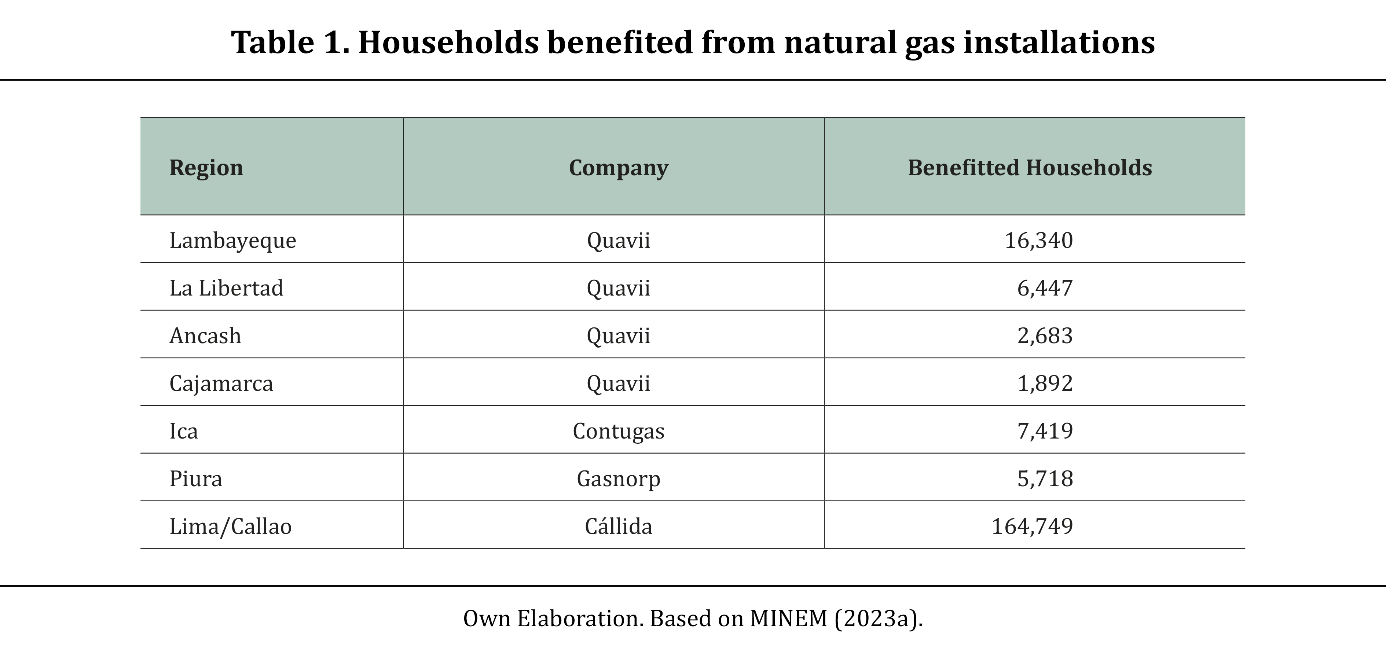
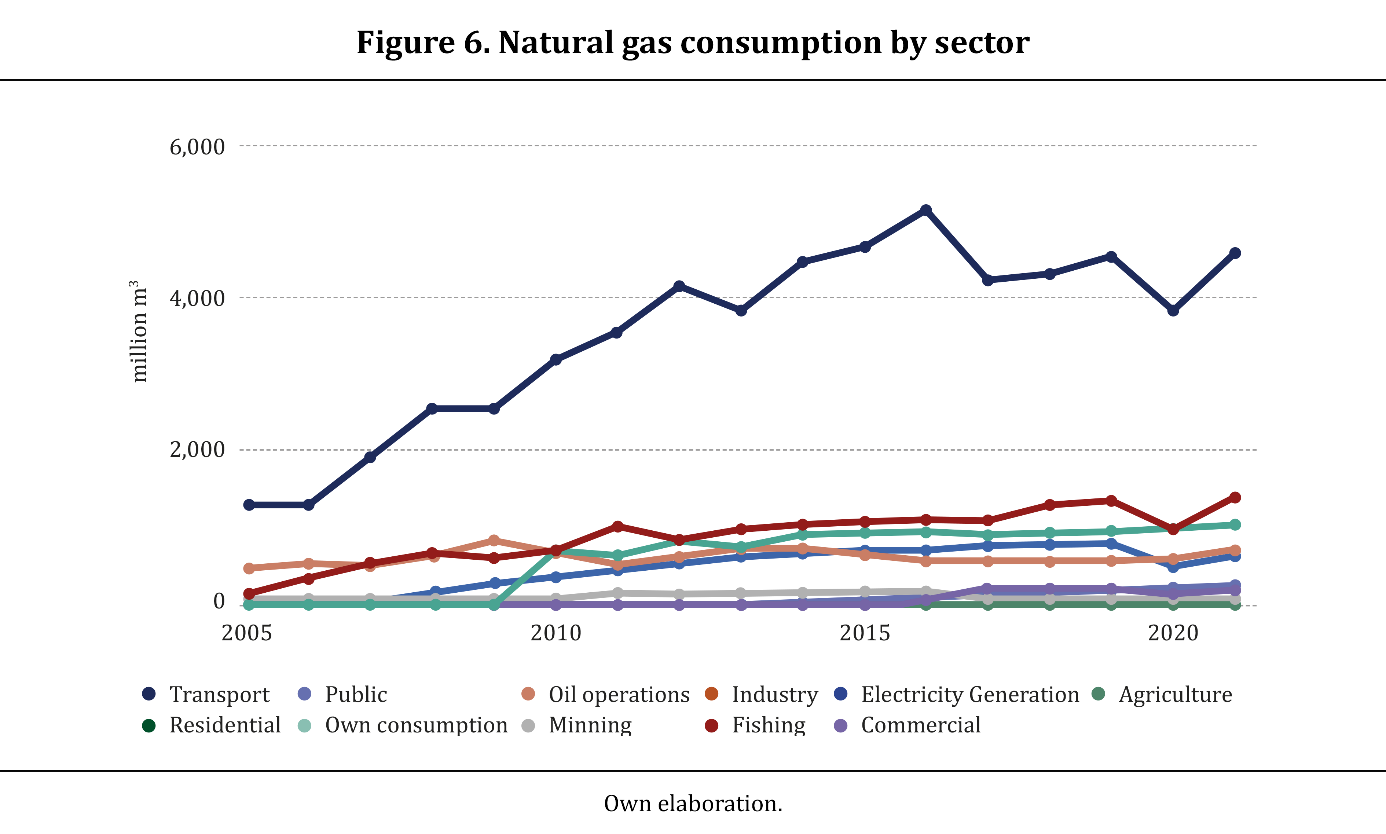
Over the past 15 years, NG demand has mainly been driven by its use in electricity production. In 2021, thermal power plants consumed 4,405 x 106 m3 of NG, accounting for approximately 52% of total consumption. This amount is 3.3 times higher than consumption by industries, and more than 20 times higher than the combined R&C usage (Fig. 6). However, due to COVID-19, demand dropped in the last two weeks of March and April 2020 (OSINERGMIN, 2021). The number of residential NG users reached 2,007,644, accounting for 20.36% of total households (PCM, 2024). Moreover, 182,770 new homes have had access to this fuel in the last quarter of 2023 (Table 1). In the transport sector, 20,433 vehicles were converted to NG in 2021, and 55,893 units underwent this conversion in 2023, 24.1% less than in 2022, when over 73,000 cars were converted (AAP, 2023).
4.2 Renewable energy
Renewable energy resources are all energy forms sustainably produced from renewable sources, which can be replenished faster than consumed (United Nations, 2024; US. Department of Energy, 2001). They might be used for electricity generation, space and water heating, cooling and transportation; and governments worldwide are encouraged to use and promote them aiming at reducing carbon emissions, achieving reliability and security of power systems, creating jobs, and reducing costs (U.S. Department of Energy, 2024). In Peru, the non-conventional RE share has grown continually from 3.4% in 2016 to 5.5% in 2022. Despite this growth, the Economic Operation Committee of the National Interconnected System has projected a similar share by 2026 (COES, 2021). A new policy objective is to reach 20% in the energy mix by 2030 (Peruvian Government, 2022).
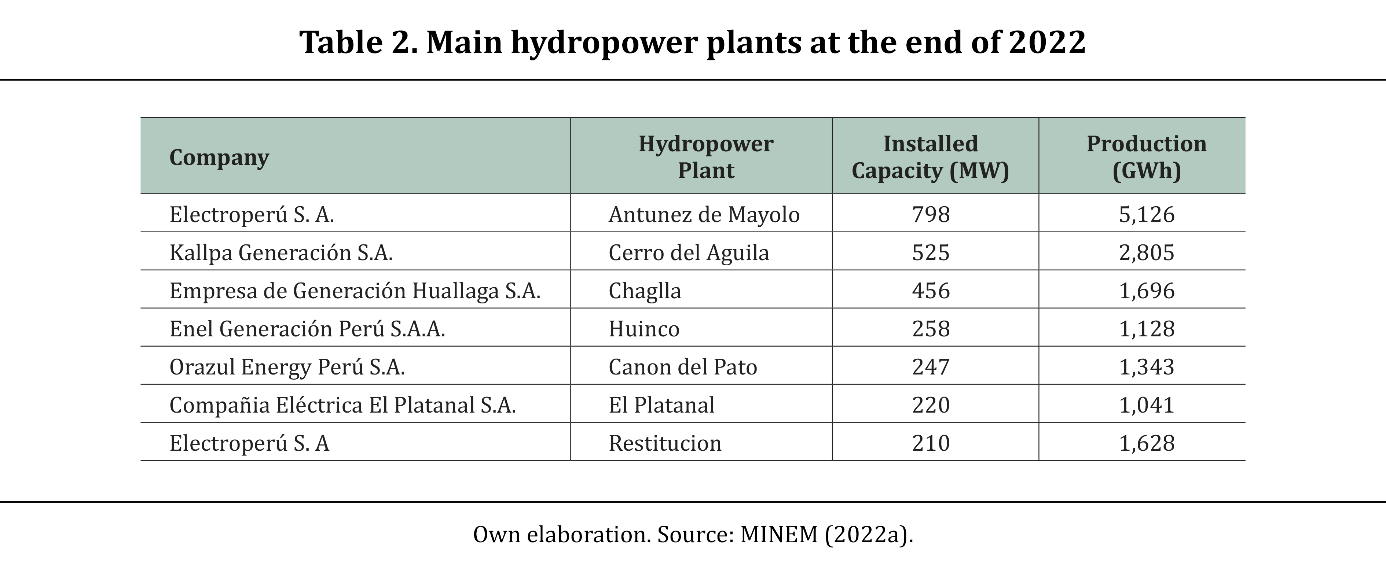
Hydropower: Peru is traditionally known as a hydroelectricity producer (OSINERGMIN, 2019). According to Mendoza, 86% of hydro resources come from the Atlantic basin (Mendoza, 2012). In terms of electricity capacity, this source accounted for the largest installed capacity in the country since 2007. However, there was a steady reduction from 2014 until 2021 (MINEM, 2023a; MINEM, 2022a), with a slight recovery in 2022 (MINEM, 2024). In 2022, hydroelectricity production reached 29,139.17 GWh, of which 99.8% was produced within the National Interconnected Electricity System (SEIN), and the remainder being utilised by isolated systems. The largest hydropower plant is Antunez de Mayolo, with an installed capacity of 798 MW (Table 2), representing 5% of the country's total capacity and the most significant production in 2022 (MINEM, 2022a).
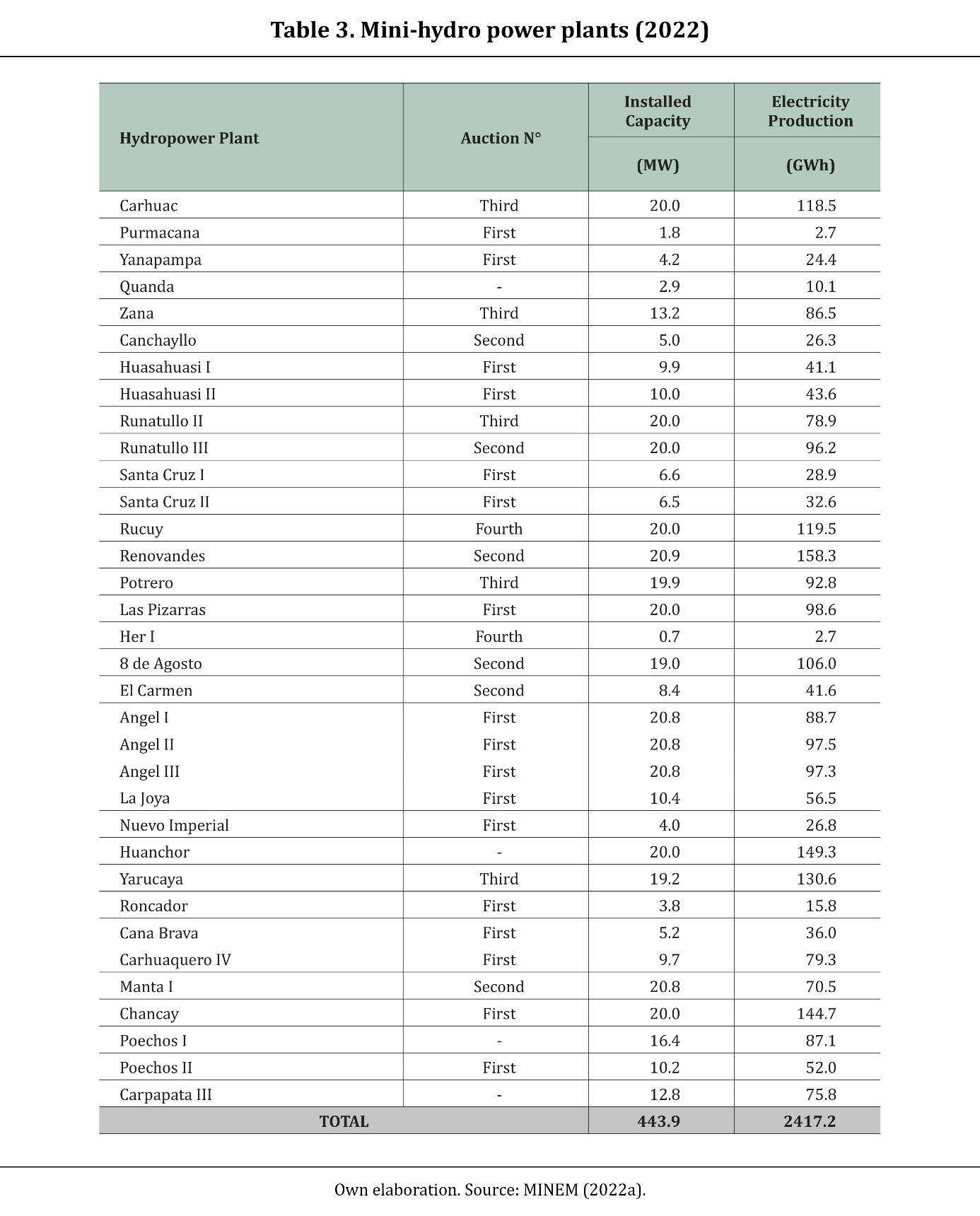
Pursuant to the applicable domestic law (D.L N° 1002), hydropower plants below 20 MW are considered non-conventional RE sources; in this regard, they take advantage of river flows and are also considered “mini hydros” (OSINERGMIN, 2017b). The Carhuaquero IV (Table 3) was the first project of its kind (OSINERGMIN, 2019). Furthermore, 45 mini hydropower plants were awarded with a total investment of 963 million US$ (OSINERGMIN, 2017b).
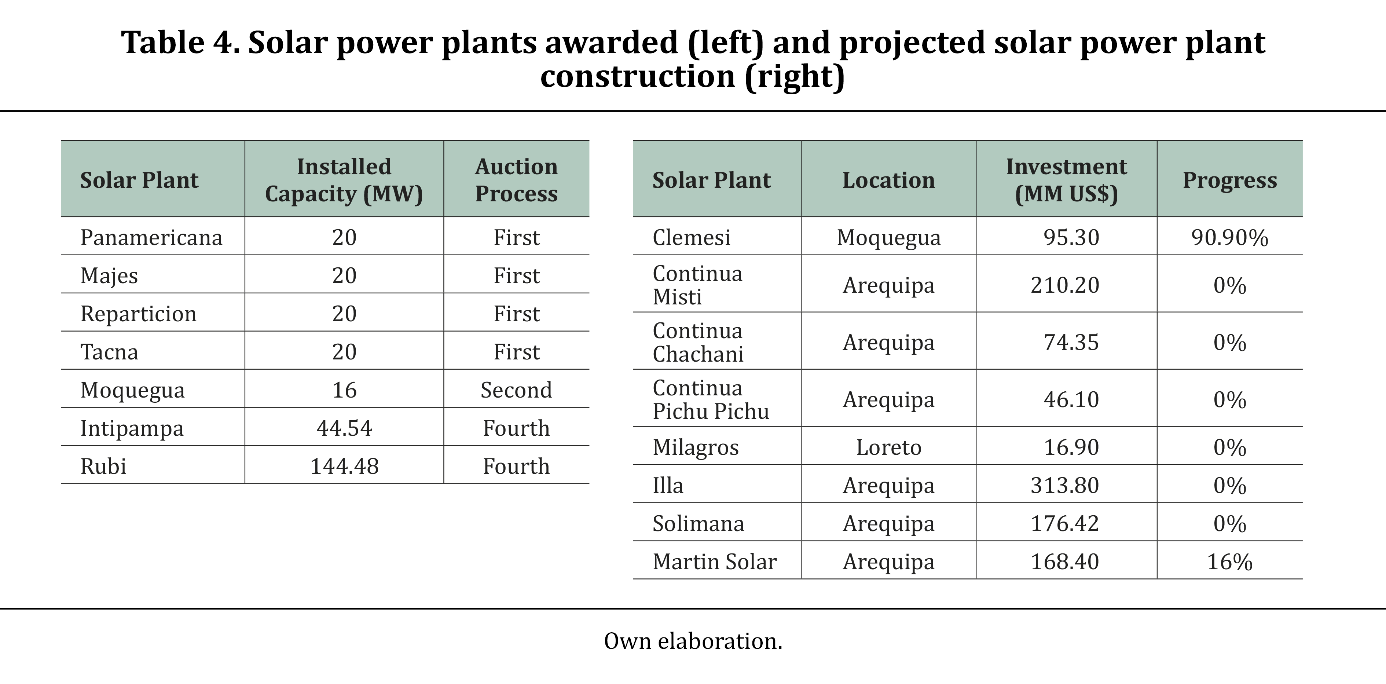
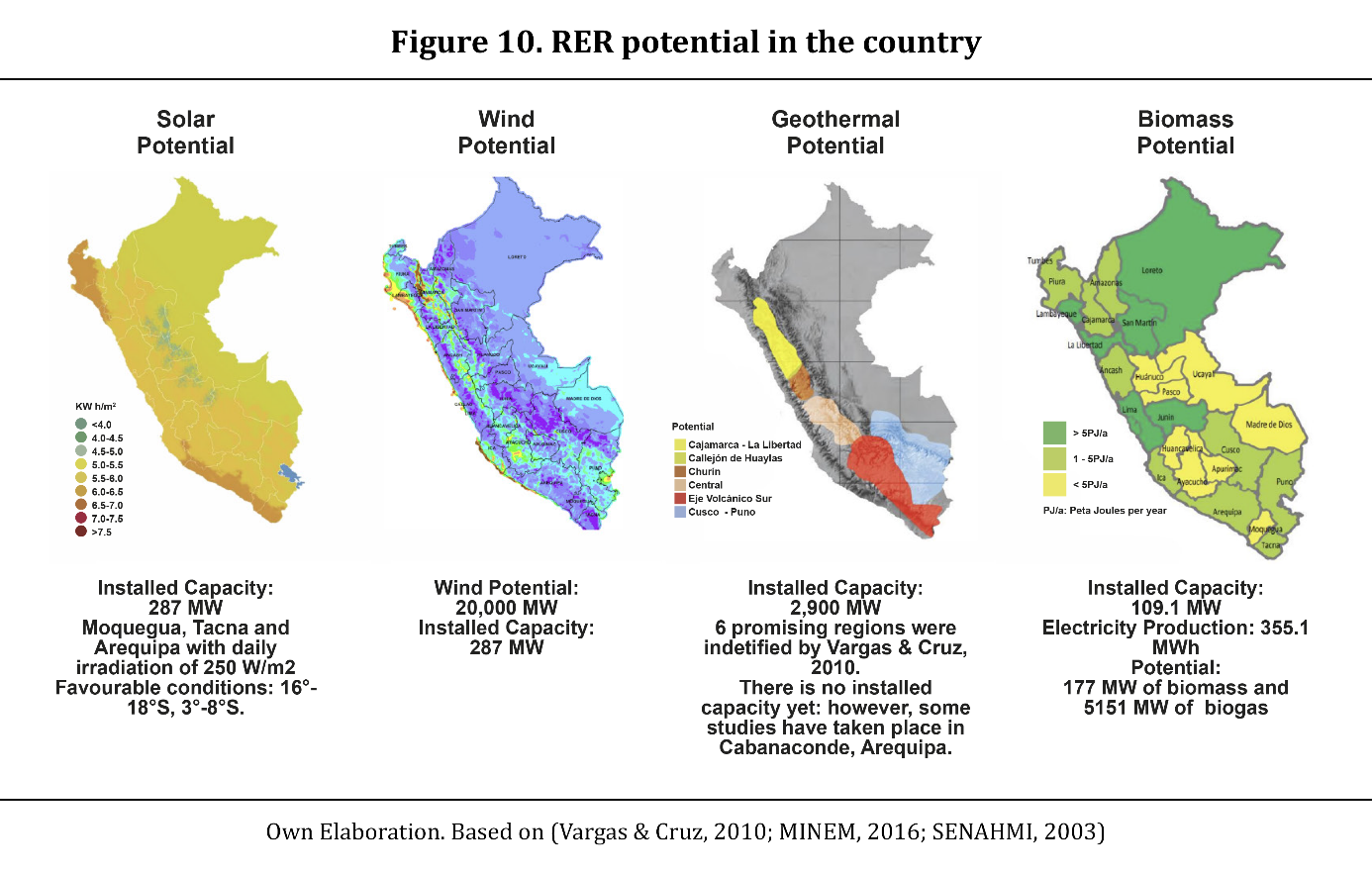
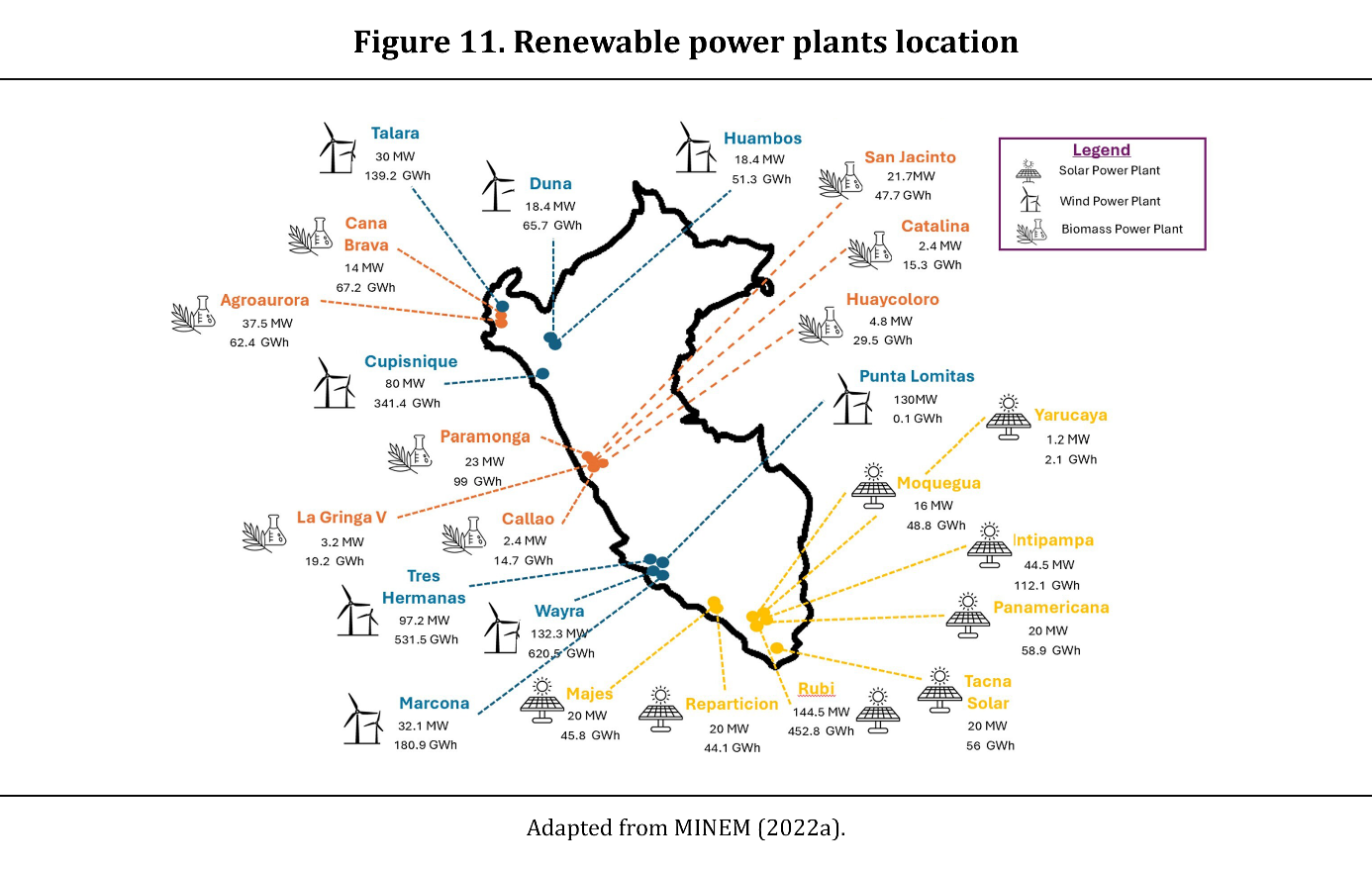
Solar: The solar resources from the IRENA’s tool have shown that the daily irradiation is near 250 W/m2 along the southern coast of Arequipa, Moquegua, and Tacna (IRENA, 2014). This is correlated with the Peruvian Solar Atlas, which depicts favourable conditions for solar power generation near 16° to 18° S; moreover, it includes the northern coast (between 3° to 8° S) and most parts of the mountains above 2,500 metres above sea level (SENAHMI, 2003). At the end of 2023, the country constructed ten solar power plants with a total capacity of 287 MW. Seven solar power plants were granted in the RE auction processes (Table 4 left). The remaining plants were private initiatives (Amantani: 0.01 MW; Purús: 0.01 MW; and Yarucaya: 1.2 MW).
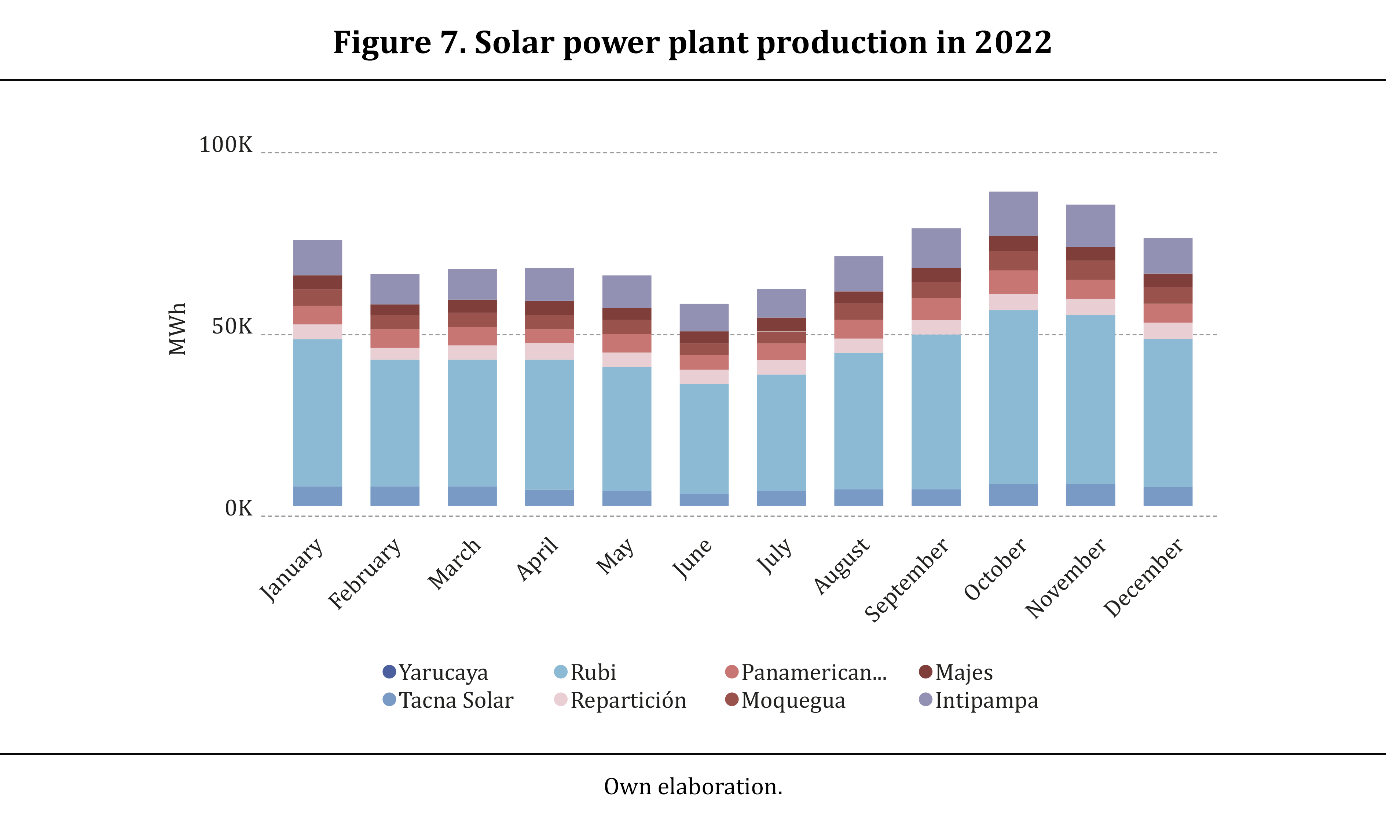
Solar production amounted to 820.7 GWh in 2022 (Fig. 7), i.e. it grew 3.88% and 13.9%, as compared to 2021 and 2020, respectively (MINEM, 2022a). At the end of 2023, many solar projects were under construction (Table 4 right). Clemesí was supposed to have a capacity of 114.93 MW, but its commercial operation, initially planned for October 31, 2023, has not been completed.
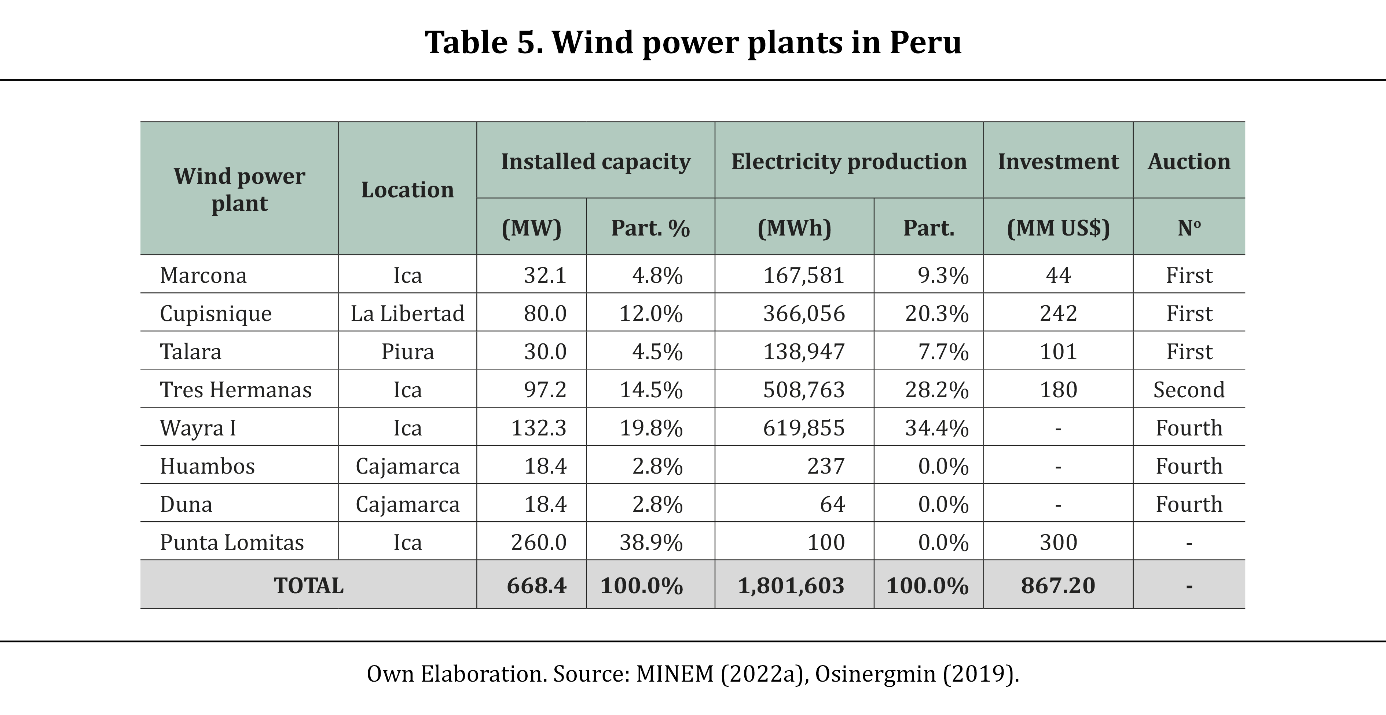
Wind: Mendoza found that 22,000 MW could be used out of the available 77,000 MW (Mendoza, 2012). This potential is located near the coast due to the strong influence of the Pacific anticyclone and the Andes Mountains (Mendoza, 2012). According to the Wind Atlas (MINEM, 2016b), Piura, Lambayeque, La Libertad, Ancash, Ica, and Arequipa present a higher average speed (6-12 m/s). In the highlands, a 6-9 m/s speed was identified (OSINERGMIN, 2019). In 2023, seven wind energy projects were awarded in public auctions, and one project was awarded directly, totalling 668 MW of installed capacity in 2023 (Table 5).
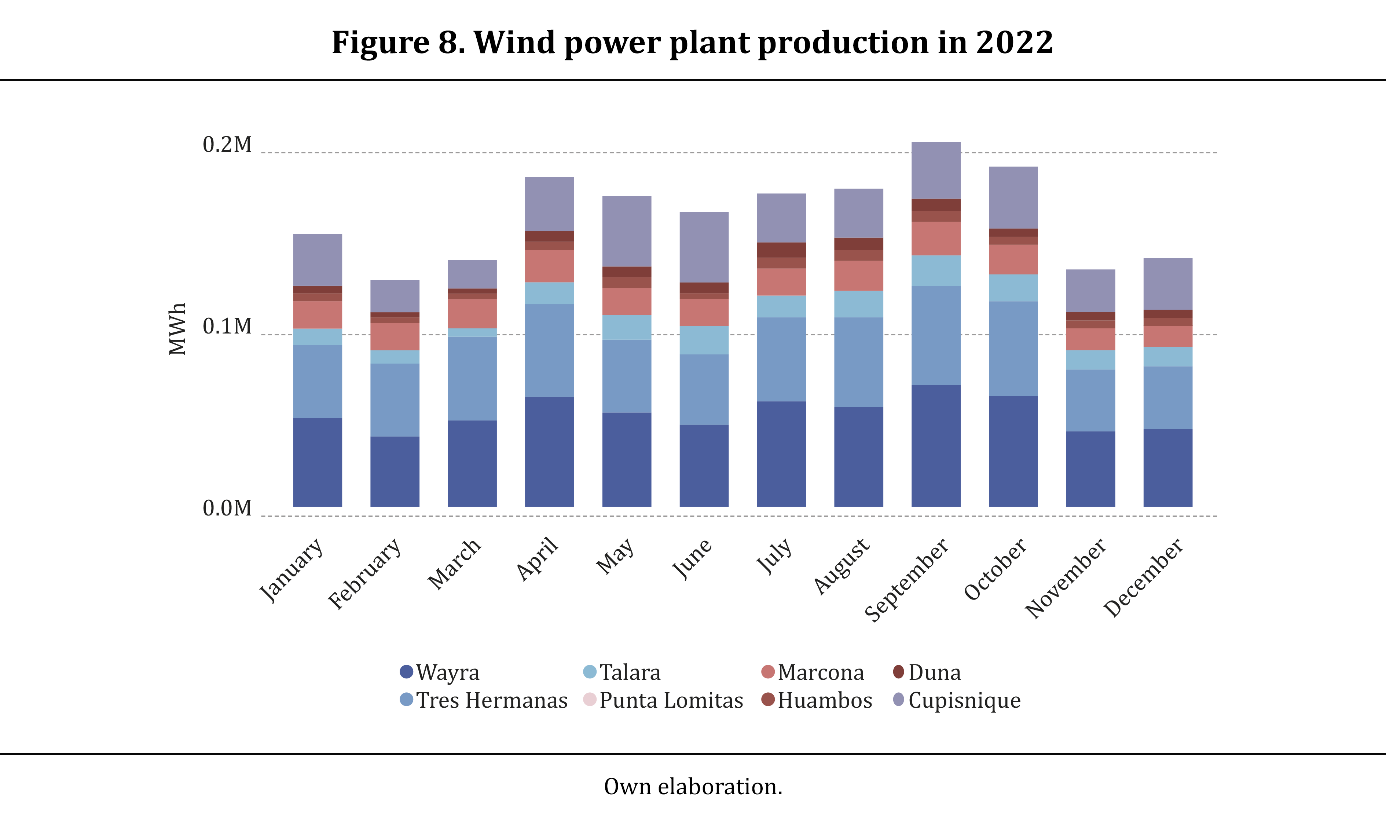
In terms of electricity generation, Wayra led in wind power production in 2022, representing 34.4% of the total electricity generated (Fig. 8). Many wind projects are projected to be built in the coming years; for instance, Wayra Extension will have an installed capacity of 177 MW by deploying 30 turbines each with 5.9 MW of nominal power (PCM, 2024).
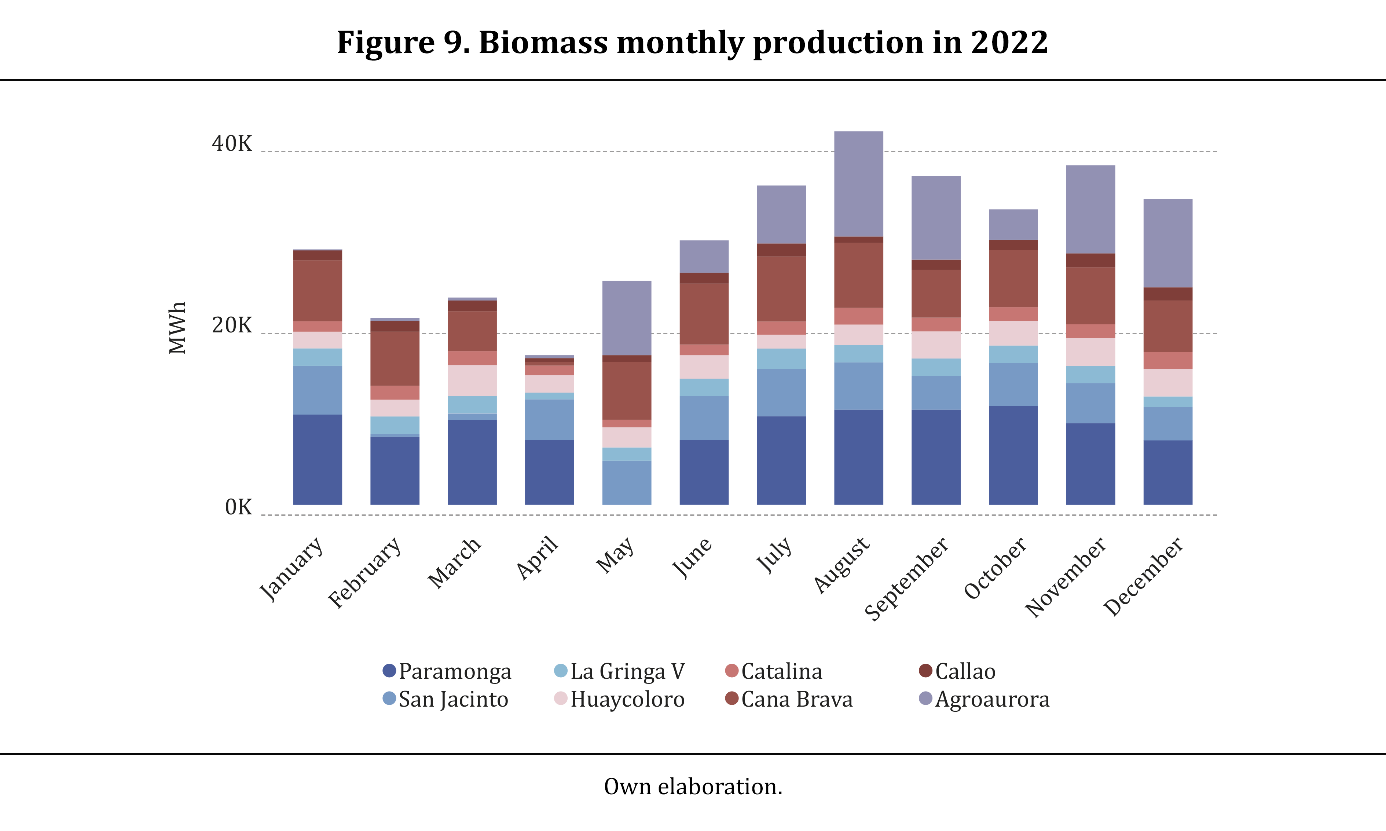
Biomass (bagasse and biogas): The capabilities required to install biomass and biogas power plants with an installed capacity of 177 MW and 5,151 MW, respectively, are shown by Mendoza (Mendoza, 2012). These resources mainly come from sugar cane in Ancash, Arequipa, La Libertad, Lambayeque, and Lima provinces (Dammert Lira et al., 2019). As of December 2022, Peru has built eight biomass power plants: Paramonga, Huaycoloro, La Gringa V, Doña Catalina, and Callao, located in Lima, Maple Etanol and Cana Brava in Piura, and San Jacinto, in Ancash. The largest are Maple Etanol and Paramonga, which have a 37.5 MW and 23 MW capacity, respectively. Paramonga, Maple Etanol, San Jacinto and Cana Brava power plants utilise bagasse from sugar (OSINERGMIN, 2019; MINEM, 2022a); the rest use primarily biogas. Electricity production in 2022 ranged from 14.7 MWh to 99 MWh, totalling 355.1 MWh (Fig. 9).
Geothermal energy: In 2012, the Master Plan for the Development of Geothermal Energy in Peru (MINEM, 2012) was published by West Japan Engineering Consultants to promote and accelerate exploitation programmes and to confirm resources (2900 MW) (OSINERGMIN, 2019). Sixty-one geothermal fields were estimated, more than half of which are located in the south. The Japan International Cooperation Agency (JICA), in cooperation with MINEM, discovered that the Southern Volcanic region and the centre of the country are the most promising areas for these activities. Currently, the Cabanaconde geothermal power plant is in the first stage; the project will be located in Arequipa with an installed capacity of 100 MW, and the construction will take place in 2026 by the Energy Development CORP (Global Energy Monitor, 2024). Figures 10 and 11 showcase Peru's RER potential and projects (Obs: Hydros are not depicted).
5. Energy access and policies
In 1992, the Ley de Concesiones Eléctricas enacted by Decree N° 25844 marked an important milestone in developing and improving the electricity sector, within the framework of the liberalisation of energy markets and the changing economic environment. In 2010, the Supreme Decree N° 064-2010-EM approved the long-term National Energy Policy to 2040. And two years later, Law 29852 was enacted, aiming at strengthening energy security within the country. Thus, it created the Hydrocarbon Energy Security System and the Energy Social Inclusion Fund (Gobierno del Perú, 2012). This fund allows the implementation of the Massive Programme of PV Systems, benefitting rural homes, schools and health centres with 208,145 installed systems in 24 regions and massification of NG via the Residential BonoGas ticket (MINEM, 2020; OSINERGMIN, 2016). On January 13, 2024, the Government transferred 491 million soles to MINEM to finance programmes exclusively promoting new NG installations (El Peruano, 2024). The transport of NG via an integrated system (“SIT Gas”) in Arequipa, Moquegua and Tacna is a project to secure and maintain the system’s reliability for SEIN users; however, its primary feature is less investor attraction.
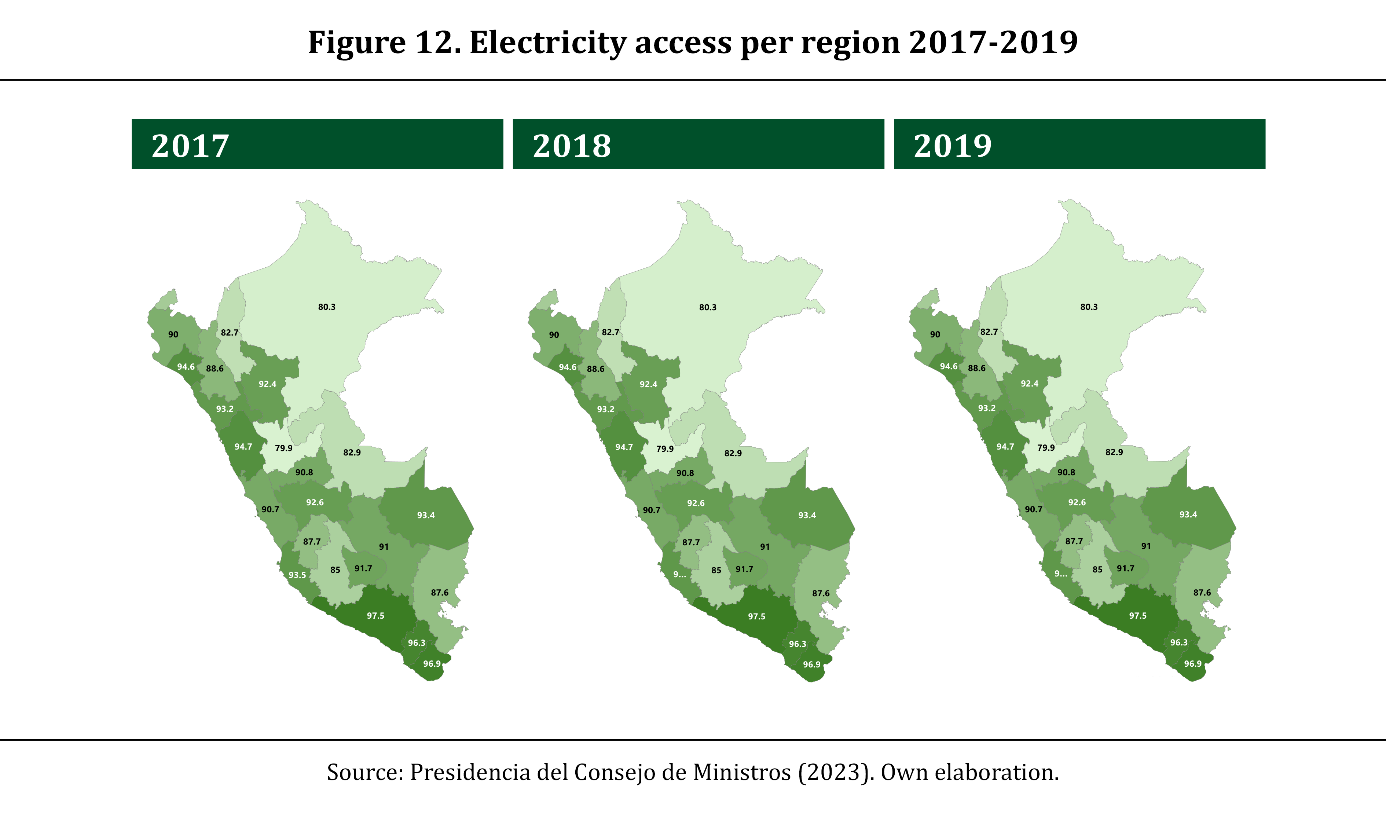
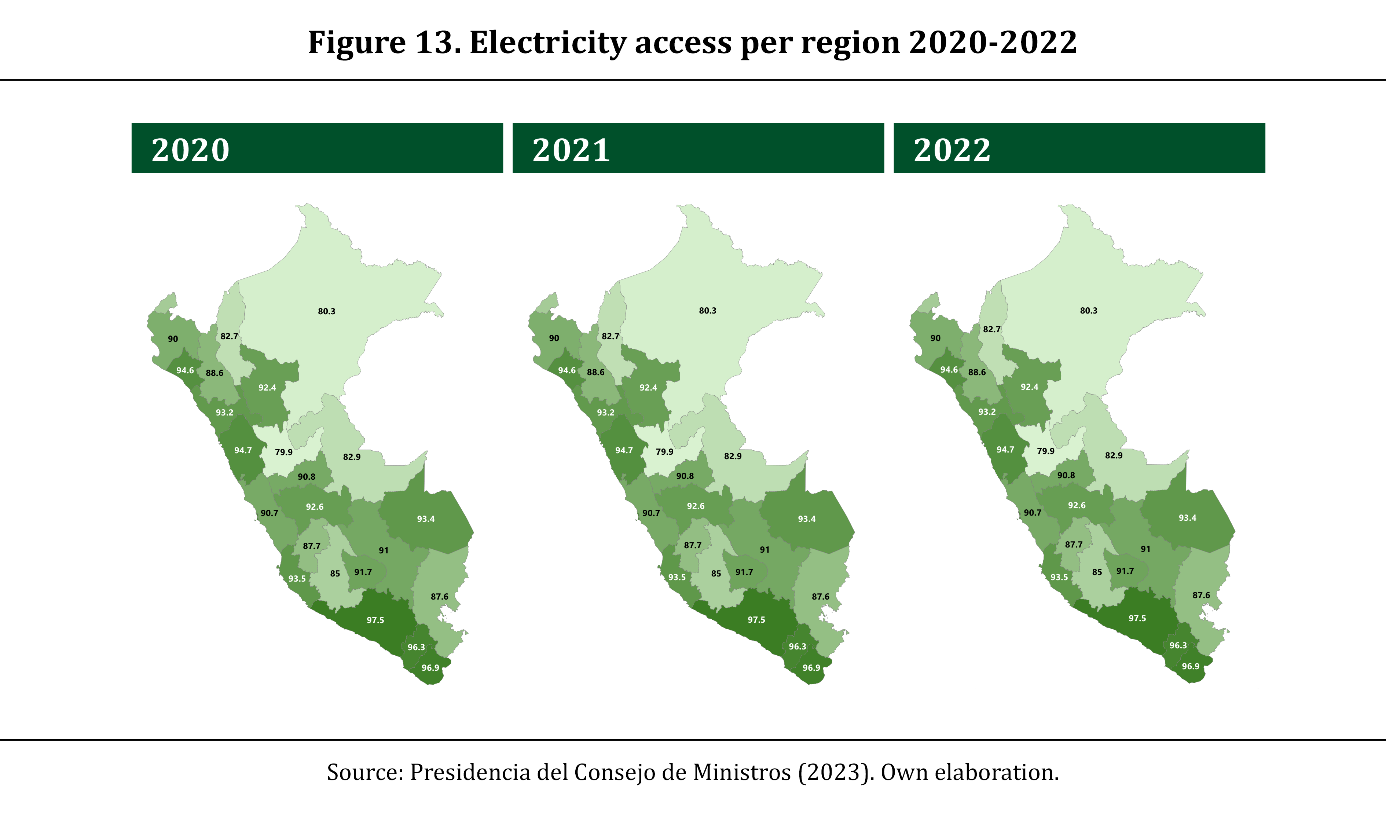
Universal Access to Energy and the Law to Ensure the Efficient Development of Electric Generation (Law N° 28832) were a significant step forward. They aimed to increase the electrification rate in the 2010s, promote financing for electric infrastructure, and ensure access to energy for all (Salvador, 2010). This plan has been updated for 2023-2027 to promote the use of NG in the least developed areas, ensuring social inclusion, reducing oil consumption and promoting electricity or other non-conventional fuels to reduce imports (El Peruano, 2023). From 2017 to 2022, the household electrification rate has significantly increased across various regions. The most notable improvement in electrification rates was reported in Loreto, with an 11.4% growth, while Piura experienced a fall of 1.1% during the same period (Fig 12 and Fig 13) (Presidencia del Consejo de Ministros, 2023).
In the next three years, the ambitious National Plan for Rural Electrification (PNER) aims to provide access to electricity to more than 500,000 rural households based on REs (MINEM, 2023b). In August 2022, 20 rural electrification projects were completed with an investment of 102.2 million soles, benefitting 9,500 homes in 11 regions, mainly in the Andean region (MINEM, 2022b).
6. Sustainability: challenges, metrics and importance
Peru's efforts to increase energy access are crucial for a sustainable energy system in Peru. Such progress involves achieving a balance between different dimensions, e.g. energy security, environmental protection, economic viability, and social equity (Kabeyi & Olanrewaju, 2020). Energy security in Peru is closely tied to the diversification of energy sources, reducing dependence on fossil fuels, and enhancing the resilience of energy infrastructure (OSINERGMIN, 2017a). Environmental protection involves reducing or minimising the ecological impacts of energy production and consumption. While helping to reduce carbon emission, hydropower reliance raises concerns about its environmental footprint, particularly in altering river ecosystems (Villena et al., 2021). Economic viability ensures affordable costs to consumers, while maintaining economic growth of the energy system. In the Peruvian context, this depends on the investment in RE, efficient allocation of resources and the ability to adapt to foreign energy price fluctuations (SINIA, 2010). Finally, social equity refers to everyone accessing affordable and reliable energy. However, in Peru, remote areas struggle with limited access to modern energy services, exacerbating regional inequalities (Gestión, 2024).
When evaluating the sustainability of the Peruvian energy mix, the Energy Intensity metric plays a crucial role. This metric, which measures the energy consumed per unit of GDP, clearly determines how efficiently energy is used when performing economic activities. This value has remained almost constant for Peru since 2006, below 5 TJ/MM US$ (MINEM, 2023a). Carbon Intensity covers the environmental aspect and measures the CO2 emissions produced per unit of energy consumed. For the Peruvian energy mix, this indicator ranges from 52.8 tCO2/TJ to 66.06 tCO2/TJ, with recent slowdowns (MINEM, 2023a). Per Capita Energy Consumption refers to the energy consumed per person within a country. This indicator has reached 27.82 TJ, showing an upward trends since 2006 (MINEM, 2023a). Lastly, the Energy Efficiency indicator measures how efficient is energy consumption in various sectors to reduce energy demand and minimise environmental impacts. Due to weak policies and regulations, Peru ranks last in South America for energy efficiency, scoring 31 out of 100 points (World Bank, 2019).
A sustainable energy mix is essential for Peru to meet its energy needs while reducing negative impacts. Furthermore, it will reduce vulnerability to external conditions and enhance energy security. To achieve this, Peru must pursue a comprehensive strategy that includes accelerating the integration of renewables, improving energy efficiency, strengthening policy, and ensuring social inclusion.
7. Results and interpretation
The energy demand in Peru has grown approximately 5% annually, reaching 335 TWh in 2022. On the other hand, the energy supply continues to be dominated by fossil fuels such as diesel and natural gas. Despite the initial impulse of renewables, they only represent 5.5% of all energy sources in 2022. The growth in demand highlights the need to ensure reliable access to energy. Dependency on fossil fuels not only reduces the ability to promote access to energy but also reduces fair access to clean energy, especially in rural areas, thus affecting the sustainability of the Peruvian energy system. According to the model, this dependency increases the country’s vulnerability to external prices and challenges the fulfilment of international commitments.
Regarding energy sources, natural gas is the most used fuel, especially for electricity generation, representing 52% of the total demand share. However, non-conventional renewable energy sources are limited. Using natural gas has increased electricity access; nonetheless, the reduced renewable energy penetration affects the socioeconomic development in rural areas. The model also exposes the need to invest in these clean sources, and the inability to do so generates obstacles to a sustainable and diversified energy mix. Carbon emissions from transportation reached 15,349 Gg in 2021, highlighting its position as the most polluting sector.
Moreover, wood in rural areas continues to be the main source of energy, exposing communities to health problems and increasing carbon emissions. The significant emissions in transport, driven by the intensive use of diesel, underscore the urgency to implement more clean solutions. Based on the conceptual model, fossil fuel dependence not only affects energy system sustainability but also compromises emission reduction goals. The permanent use of wood for cooking in rural communities shows the unfairness in access to clean sources, reinforcing the need for policies promoting clean
energy sources.
Regarding policy implications, despite efforts to promote natural gas and renewable sources, the current strategies have not been enough to properly diversify the energy mix. Policies must be analysed to promote clean energy and enhance energy efficiency. The model suggests that integrating more ambitious policies and adequate regulatory frameworks is essential to advance into a more sustainable energy system. Furthermore, special attention is required to reduce energy access gaps in rural areas, thus ensuring that all citizens benefit from the energy transition promoted by the Government.
8. Strategies towards 2030
In 2020, the Government updated its NDCs with the global objective of contributing to climate ambition by 2030. In the energy sector, it was proposed, among others, to increase RE’s share in the national energy mix by 6.8%. Despite being close to this value, more significant incentives are required in addition to updating the legal framework. For instance, RE production is only recognised during the network's peak hour between 17-23 hr; a block time agreement is suggested for supply reliability. To encourage the growth of renewables, the legal framework shall be updated to incorporate distributed generation and boost the development of this sector. The gradual implementation of 990 systems in 12 cities has been planned to reduce 0.4 MtCO2eq by 2030. Moreover, complementing this with storage systems could promote renewables locally.
Regarding energy efficiency labelling, the Government has increased the target number of labelled equipment from 1 million to more than 7 million. Similarly, improvements are proposed in other sectors, such as technological changes in HVAC systems and lighting. For example, the Homologation Plan 2022 established nine technical specification sheets for LED panels (El Peruano, 2022). Fostering a culture of saving energy is crucial to reducing energy consumption.
In transport, 14 measures have been proposed, and the most outstanding one was the promotion of light NG vehicles, clean fuels, and electric vehicles. The latter foresees the incorporation of electric buses and light vehicles (EV fleet) that shall reach 5% of the total vehicle fleet, which would represent a reduction of 0.2 MtCO2eq. At this point, using Chancay Port to assemble electric vehicles would boost this aspect significantly. However, incentives and charging infrastructure are still pending issues that must be updated. Other programmes, such as Scrap and Vehicle Renewal, seek to remove 5% of cargo trucks older than 20 years annually. Improved scrap monitoring could determine the current state of the units. Two mitigation strategies have been identified in the industrial sector, specifically in the construction sector, which is the subsector with highest emissions (MINAM, 2023) due to the use of clinker. Regarding household emissions, clean cooking aims to reduce 1.9 MtCO2eq by 2030, which will be achieved by deploying improved solar and LPG-based cookstoves. The use of solar cookers (Toonen, 2009) in rural areas could minimise wood reliance, increasing the number of families (155,023 homes) that already have improved their quality of life with the “Half a Million Improved Stoves Campaign for a smoke-free Peru” (PCM et al., 2009).
9. Conclusions
The study examined the energy scenario in Peru, focusing on the energy demand and supply, sustainability, and policies that govern the sector. The outcomes reveal that the country is still highly dependent on fossil fuels despite increasing renewable energy demand and natural gas utilisation. This situation challenges the sustainability of the energy system in a context where renewable energy sources represent a modest portion of the energy mix. Dependency on fossil fuels exposes the unequal access to clean energy, especially in rural communities, and leads to increased greenhouse gas emissions, compromising the NDCs of the country. Transport emissions are alarming, underscoring the need to adopt clean technologies and promote more non-conventional energy sources.
This study's conceptual model focuses on three components: energy access, sustainability and energy policies, bringing a valuable framework to interpret the results. In addition, it highlights the need for more ambitious policies that incentivise renewables and improve energy efficiency. Moreover, it provides a valuable framework for analysing and understanding the current challenges regarding the evolution of energy systems. The results recall political will to enhance energy access policies and promote investment in clean sources regardless of fossil fuels. The outcomes provide direct benefits in achieving climate goals and improving public health. Nonetheless, some limitations surround the analysis, such as the availability of data retrieved until 2022, suggesting more research is required on new policies implemented and emerging technologies -such as hydrogen- in the energy mix. Finally, the country faces a critical moment in its energy transition. As the government seeks to diversify its energy mix and to meet its climate commitments by 2030 measures, policies and strategies must focus on reducing dependence on fossil fuels and fostering equitable access to sustainable energy sources for all Peruvians.
References
AAP (2023). Evolution of the Natural Gas Market in Peru. Lima: Automotive Association of Peru.
BCRP (2022). Estadísticas de 100 años del Banco Central de Reserva del Perú. Lima: BCRP.
BCRP (2024). Macroeconomic Report: IV Trimester of 2023. Lima: Central Reserve Bank of Peru.
Bergmann, J.; Vinke, K.; Fernández Palomino, C.A.; Gornott, C.; Gleixner, S.; Laudien, R.; Lobanova, A.; Ludescher, J. & Schellnhuber, H. J. (2021). Evaluación de la evidencia: Cambio climático y migración en el Perú. Ginebra: PIK, OIM .
Chavez-Rodriguez, M. F.; Szklo, A. & Frossard Pereira de Lucena, A. (2015). Analysis of past and future oil production in Peru under a Hubbert approach. Energy Policy, 77, 140-151.
COES (2021). Informe de Diagnóstico de las Condiciones Operativas del SEIN. Lima: Comité de Operación Económica del Sistema Interconectado Nacional.
Dammert Lira, A.; Javier Jara, J. J. & Bautista, L. (2019). El Potencial de las Energias Renovables en el Peru. Asociacion Española de Derecho de la Energia.
Aguirre Madrid, M. M. E. & Orihuela Romero, C. E. (2014). Situación de la Industria del Petróleo en el Perú, Período 1996-2010. Natura Economía, 2(1), 21-40.
El Peruano (2022). Aprueban nueve (09) Fichas de Homologación para paneles LED: Resolución Ministerial Nº 190-2022-MINEM/DM. Retrieved from El Peruano: https://busquedas.elperuano.pe/dispositivo/NL/2072965-2
El Peruano (2023). Aprueban el Plan de Acceso Universal a la Energía 2023-2027: Resolución Ministerial Nº 053-2023-MINEM/DM. Retrieved from El Peruano: https://busquedas.elperuano.pe/dispositivo/NL/2151841-1
El Peruano (2024). La masificación del gas natural para las familias más vulnerables. Retrieved from El Peruano: https://www.elperuano.pe/noticia/239366-la-masificacion-del-gas-natural-para-las-familias-mas-vulnerables
Elavarasan, R. M.; Pugazhendhi, R.; Jamal, T.; Dyduch, J.; Arif, M. T.; Kumar, N. M.; Shaifullah, G. M.; Chopra, S. S. & Nadarajah, M. (2021). Envisioning the UN Sustainable Development Goals (SDGs) through the lens of energy sustainability (SDG 7) in the post-COVID-19 world. Applied Energy, 292.
EsSalud. (2017) EsSalud: Cocinar con leña en ambientes cerrados puede causar Fibrosis Pulmonar. Retrieved from https://www.essalud.gob.pe/essalud-cocinar-con-lena-en-ambientes-cerrados-puede-causar-fibrosis-pulmonar/
Gestión (2024). Cerca de dos millones de peruanos no tienen energía eléctrica. Retrieved August 15, 2024, from https://gestion.pe/economia/cerca-de-dos-millones-de-peruanos-no-tienen-energia-electrica-noticia/
Global Energy Monitor (2024). Global Geothermal Power Tracker. Retrieved from Global Energy Monitor: https://globalenergymonitor.org/projects/global-geothermal-power-tracker/tracker-map/
Gobierno del Perú (2012). Organismo Supervisor de la Inversión en Energía y Minería. Retrieved from Ley que crea el Sistema de Seguridad Energética en Hidrocarburos y el Fondo de Inclusión Social Energético: LEY Nº 29852: https://www.gob.pe/institucion/osinergmin/normas-legales/732327-29852
Gonzáles-Eguino, M. (2015). Energy poverty: An overview. Renewable and Sustainable Energy Reviews, 47, 377-385.
INEI (2016). PERÚ: Sistema de Monitoreo y Seguimiento de los Indicadores de los Objetivos de Desarrollo Sostenible (ODS) . Lima: Instituto Nacional de Estadística e Informática.
INEI (2019). Perú: Estimaciones y Proyecciones de la Población Nacional, 1950-2070. Boletín de Análisis Demográfico N 38. Lima: INEI.
INEI (2023). Condiciones de Vida en el Perú-Trimestre: Octubre-Noviembre-Diciembre 2022. Lima: Instituto Nacional de Estadística e Informática.
INGENMET (2000). Carbón en el Perú. Lima: Instituto Geológico Minero y Metalúrgico-UNI.
IRENA (2014). PERU: Renewables Readiness Assessment 2014. International Renewable Energy Agency.
Kabeyi, M. J. & Olanrewaju, O. (2020). Managing Sustainability in Electricity Generation. 2020 IEEE International Conference on Industrial Engineering and Engineering Management (IEEM). Singapore.
Luyo Quiroz, A. (2011). Future vision of the Peruvian coal. Revista del Instituto de investigación de la Facultad de minas, metalurgia y ciencias geográficas, 14(28), 1-9.
Mendoza, J. (2012). Marco legal de las energías renovables en el Perú: seminario de energías renovables en el Perú y tecnología Made in Germany. Lima: OSINERGMIN.
MINAM (2023). Reporte Anual de Gases de Efecto Invernadero del Sector Procesos Industriales y Uso de Productos 2019. Lima: Ministerio de la Producción, Viceministerio de MYPE e Industria.
MINEM (2005). Balance Nacional de Energía 2005. Lima: Ministerio de Energía y Minas.
MINEM (2006). Balance Nacional de Energia 2006. Lima: Ministerio de Energía y Minas, Oficina General de Planeamiento y Presupuesto.
MINEM (2012). Master Plan for development of geothermal energy in Peru. Lima: Ministry of Energy and Mines.
MINEM (2014). Balance Nacional de Energía 2004. Lima: Ministerio de Energía y Minas-Dirección General de Eficiencia Energética .
MINEM (2016a). Balance Nacional de Energía 2016. Lima: Ministerio de Energía y Minas, Dirección de Eficiencia Energética.
MINEM (2016b). Atlas Eolico del Peru. Consorcio Barlovento Recursos Naturales, Barlovento Renobales Latinoamerica y Vortex . Lima: Direccion General de Electricidad.
MINEM (2020). Evaluacion de Implementacion Anual 2020. Lima: Ministerio de Energía y Minas.
MINEM (2022a). Anuario Estadistico de Electricidad. Lima: Direccion de Estudios y Promocion Electrica: Direccion General de Electricidad, Viceministerio de Electricidad.
MINEM (2022b). Presentación: Perú, hacia una Transición Energética Sostenible. Lima: Ministerio de Energía y Minas.
MINEM (2023a). Balance Nacional de Energía 2021. Lima: Dirección General de Eficiencia Energética, Área de Planeamiento Energético.
MINEM (2023b). Plan Nacional de Electrificación Rural (PNER): Componente Largo Plazo 2024-2033, Componente Mediano Plazo 2024-2026. Lima: Ministerio de Energía y Minas.
MINEM (2024). Balance Nacional de Energía 2022. Lima: Dirección General de Eficiencia Energética, Área de Planeamiento Estratégico.
OSINERGMIN (2019). Energias Renovables: Experiencia y Perspectivas en la ruta del Peru hacia la transicion energetica. Lima: Organismo Supervisor en la Inversion de Energia y Mineria en el Peru.
OSINERGMIN (2015). La Industria de los Hidrocarburos Líquidos en el Perú. Lima: Organismo Supervisor de la Inversión en Energía y Minería.
OSINERGMIN (2016). La Industria de la electricidad en el Peru (Primera edición ed.). Lima: Organismo Supervisor de la Inversión en Energía y Minería.
OSINERGMIN (2017a). Análisis sobre seguridad energética: El caso Peruano. Lima: Gerencia de Políticas y Análisis Económico.
OSINERGMIN (2017b). La Industria de la Energia Renovable en el Peru: 10 años de contribuciones a la mitigacion del cambio climatico. Lima: Organismo Supervisor de la Inversión en Energia y Mineria.
OSINERGMIN (2017c). La Industria del Gas Natural en el Perú: A diez años del Proyecto Camisea (Tercera edición ed.). Lima: Organismo Supervisor de la Inversión en Energía y Minería.
OSINERGMIN (2021). La Industria del Gas Natural en el Perú: Mirando al Bicentenario y perspectivas recientes (Primera edición ed.). Lima: Organismo Supervisor de la Inversión en Energía y Minería.
Owusu, P. A. & Asumadu-Sarkodie, A. (2016). A review of renewable energy sources, sustainability issues and climate change mitigation. Cogent Engineering, 3.
PCM, JUNTOS, OPS (2009). Campaña Nacional Medio Millón de Cocinas Mejoradas Certificadas por un Perú sin Humo. BVS Minsa.
PCM (2024). Informe N D00001-2024-PCM-OCG-ICC. Lima: Presidencia de Consejo de Ministros.
Pérez-Taiman, J. (2009). Breve reseña de la exploración y explotación de petróleo en el Perú desde el punto de vista legal. Círculo de Derecho Administrativo.
Peruvian Government (2022). Plataforma digital única del Estado Peruano. Retrieved from Gobierno declara de interés nacional la emergencia climática: Decreto Supremo N° 003-2022-MINAM.
Pontoni, A. (1982). Políticas Petroleras en el Perú 1968-1982. Documento de Trabajo No 53. Retrieved January 2024, from https://repositorio.pucp.edu.pe/index/bitstream/handle/123456789/46692/n_53.pdf?sequence=1&isAllowed=y
Presidencia del Consejo de Ministros (2023). Observatorio CEPLAN. Retrieved from Incremento de la cobertura de electrificación: https://observatorio.ceplan.gob.pe/ficha/t39
Quijandría, J. (1993). El Futuro de la Empresa del Estado: El caso del sector petrolero. Lima, Perú: IEP.
Sachs, J.; Schmidt-Traub, G.; Mazzucato, M.; Messner, D.; Nakicemovic, N. & Rockström, J. (2019). Six Transformations to achieve the Sustainable Development Goals. Nature Sustainability, 805-814.
Salvador, J. (2010). Universal access to the energy in Peru: Challenge and reality. La Revista del Gas Natural.
SENAHMI (2003). Atlas de Energia Solar del Peru. Lima: Servicio Nacional de Meteorología e Hidrología del Perú.
SINIA (2010). Propuesta de Politica Energética de Estado Perú 2010-2040. Retrieved August 15, 2024, from https://sinia.minam.gob.pe/documentos/propuesta-politica-energetica-estado-peru-2010-2040
Toonen, H. M. (2009). Adapting to an innovation: Solar cooking in the urban households of Ouagadougou (Burkina Faso). Physics and Chemistry of the Earth, Parts A/B/C, 65-71.
U.S. Department of Energy (2024). Office of Energy Efficiency & Renewable Energy. Retrieved from Renewable Energy: https://www.energy.gov/eere/renewable-energy
U.S. Energy Information Administration (2023). Peru. Retrieved from EIA International: https://www.eia.gov/international/overview/country/PER
United Nations (2015). Transforming our world: the 2030 agenda for sustainable development. United Nations. Retrieved from Transforming our world: the 2030 agenda for sustainable development.
United Nations (2024). United Nations-Climate Action. Retrieved from What is renewable energy?: https://www.un.org/en/climatechange/what-is-renewable-energy
US. Department of Energy (2001). Renewable Energy: An Overview. National Renewable Energy Laboratory (NREL).
Vásquez, A. C. (2005). La Organización Económica de la Industria de Hidrocarburos en el Perú: el Segmento Upstream del Sector Petrolero. Office of Economic Research, OSINERGMIN.
Villena, D.; Orcotorio, R. & Ávalos, V. (2021). Hidroeléctricas en Sudamérica y en el Perú: Situación actual en la cuenca del río Marañón (Derecho, Ambiente y Recursos Naturales (DAR) ed.). Lima: Sonimagenes del Perú S.C.R.L.
World Bank (2019). Policy Matters: Regulatory Indicators for Sustainable Energy. Washington, DC: ESMAP Report.
Disclosure of potential conflicts of interest |
The author holds a Master's degree in Renewable Energy and Clean Technologies from the University of Manchester and a bachelor's degree in Electrical Engineering from the Universidad Nacional Mayor de San Marcos, Peru. Diploma in Electricity Regulation at ESAN University, Peru. |
Revista Kawsaypacha: Sociedad y Medio Ambiente.
N° 14 julio – diciembre 2024. E-ISSN: 2709 – 3689
How to cite: Colina-Calvo, A. O. (2024). A Comprehensive review of Peru’s energy scenario. Revista Kawsaypacha: Sociedad Y Medio Ambiente, (14), D-006. https://doi.org/10.18800/kawsaypacha.202402.D006 |
|