N° 17 enero – junio 2026. E-ISSN: 2709 – 3689
Artículo de investigación
Social Perception of Green Hydrogen Production in Patagonia, Argentina
Percepción social de la producción de hidrógeno verde en la Patagonia, Argentina
Rosaura Etcheguia a
María José Pascualone a
a Universidad Tecnológica Nacional. Facultad Regional Córdoba. Centro de Investigación y Transferencia en Ingeniería Química Ambiental (CIQA), Argentina
| How to Cite: Etcheguia, R., & Pascualone, M. J. Social Perception of Green Hydrogen Production in Patagonia, Argentina. Revista Kawsaypacha: Sociedad Y Medio Ambiente, (17), A-009. https://doi.org/10.18800/kawsaypacha.202601.A009 |  |
Abstract: Green hydrogen emerges as a possible decarbonization solution due to its ecologically beneficial energy carrier qualities. Non-technical issues, such as social acceptance, are important to consider while developing new energy solutions. This study looks into social perspectives of green hydrogen production by water electrolysis with wind energy and its use as an energy vector in a specific region in Argentine Patagonia. An online survey was undertaken as a quantitative method, with 134 participants. The findings show that most respondents had a strong understanding of green hydrogen as a potential source of clean energy that does not emit pollutants. Social concerns about the manufacturing process were overwhelmingly positive, emphasizing projected benefits such as economic development, job creation, improved awareness of renewable energies, and energy independence. This latter characteristic is consistent with the majority preference for using produced energy to meet local demand, regardless of export potential. Overall, the findings indicate a growing knowledge of sustainable development challenges and a preference for ecologically friendly energy transitions in the local context.
Keywords: Green Hydrogen. Social acceptance. Energy transition. Decarbonization. Patagonia, Argentina.
Resumen: El hidrógeno verde surge como una alternativa prometedora para la descarbonización debido a sus propiedades ambientalmente favorables como portador de energía. Sin embargo, factores no técnicos, como la aceptación social, resultan cruciales durante la planificación de nuevas tecnologías energéticas. Este estudio investiga las percepciones sociales sobre la producción de hidrógeno verde mediante electrólisis del agua utilizando energía eólica, y su uso como vector energético, en una región seleccionada de la Patagonia Argentina. Se realizó una encuesta en línea como método cuantitativo, con un total de n = 134 participantes. Los resultados indican que, entre la población encuestada, existe un nivel relativamente alto de conocimiento sobre el hidrógeno verde, y que la mayoría de los encuestados lo asocia con una fuente potencial de energía limpia que no genera emisiones contaminantes. Las preocupaciones sociales respecto del proceso de producción fueron predominantemente positivas, destacándose beneficios esperados como el desarrollo económico, la creación de empleo, el aumento de la conciencia sobre las energías renovables y la autonomía energética. Este último aspecto se corresponde con la preferencia mayoritaria por utilizar la energía producida para abastecer la demanda local, independientemente de las posibilidades de exportación. En conjunto, los hallazgos sugieren una incipiente conciencia sobre el desarrollo sostenible y una disposición favorable hacia transiciones energéticas orientadas a la protección ambiental en el contexto local.
Palabras clave: Hidrógeno verde. Aceptación social. Transición energética. Descarbonización. Patagonia, Argentina.
1. Introduction
On the path to decarbonization, it is critical to reduce direct consumption of fossil fuels by replacing them with electricity and/or alternative fuels produced from renewable and non-polluting sources (Sharma et al., 2021). In recent decades, hydrogen has received increased attention as a vital component with the potential to greatly contribute to the transition from fossil fuels to cleaner energy systems. Its key benefits include: i) a high energy density (143 kJ/g), roughly 2.75 times that of hydrocarbons; ii) no greenhouse gas emissions during combustion, with water as the only waste; and iii) its position as an energy transporter. These qualities establish hydrogen as a potentially transformational component of the global energy mix (Pascualone et al., 2019; Singla et al., 2021; Osman et al., 2022).
Despite these benefits, hydrogen cannot currently be considered a completely clean fuel because most current production methods rely significantly on fossil fuels. Producing a low-emission energy carrier using polluting technologies with limited resources is a basic paradox (Yun et al., 2018). Hydrogen produced with renewable energy sources can result in significant reductions in carbon emissions. In this regard, hydrogen can only be termed a clean energy vector if the related production technologies are also clean (Sharma et al., 2021). Water electrolysis is considered one of the most effective ways for green hydrogen production because it employs water as a feedstock and produces solely pure oxygen as a byproduct. Furthermore, electrolysis can directly use electricity from renewable sources such as solar, wind, and biomass, resulting in high efficiency and the production of high-purity hydrogen suitable for conversion into electricity via low-temperature fuel cells (Shiva Kumar & Himabindu, 2019; Takach et al., 2022).
Argentina has abundant renewable energy resources and significant potential (particularly in wind energy) to become a major producer and exporter of green hydrogen (Armijo & Philibert, 2020). Patagonia, located in the southernmost part of the American continent between the 37th and 56th parallels south, covers an area of approximately 1.05 million km², 90% of which lies within Argentine territory. Although it accounts for nearly one-third of the country’s land area, less than 5% of the country’s population resides there. The region is characterized by a dry climate and persistent, high-intensity winds driven by Pacific air masses. These conditions, combined with vast available land, create exceptional wind resources hardly matched globally (Aprea & Bolcich, 2020). Sigal et al. (2014) reveal wind resources mostly concentrate in southern Chubut Province, particularly in the Escalante Department, whose main urban center is Comodoro Rivadavia. This area has been identified as having one of the highest hydrogen production potentials, estimated at 464 t/km²/year (Sigal et al., 2014). In addition, feasibility studies on large-scale liquid hydrogen production from wind energy have highlighted the Comodoro Rivadavia region as especially suitable due to the availability of detailed meteorological data, existing infrastructure, and strong wind potential (Mönnich et al., 2004).
While technical factors define the theoretical potential for decarbonization, non-technical factors (such as costs, environmental impacts, regulatory frameworks, public acceptance, and consumer preferences) largely determine the extent of real-world implementation (Baur et al., 2022). Social acceptance plays a critical role, as it can facilitate political support and stimulate investment by industry and governments, whereas social opposition may result in delays or even the cancellation of energy infrastructure projects (Bock & Reimann, 2017). Consequently, social acceptance has become a central dimension in the development of renewable energy technologies (Yu et al., 2017). To better understand the elements affecting support for or resistance to new technology, researchers should examine citizens' opinions of potential risks and rewards (whether social, environmental, or economic).
At present, scientific, technological, and industrial systems are increasingly focused on hydrogen across its entire value chain (Abdalla et al., 2018). However, research addressing social and environmental dimensions remains limited and is largely concentrated in Europe (Gamboa & Munda, 2007; Langbroek & Vanclay, 2012; Kavanagh, 2017; Koj et al., 2017; Schlör et al., 2017; Zhao & Ravn Nielsen, 2018; Emmerich et al., 2020; Heras & Martín, 2020; Llera-Sastresa et al., 2020; You et al., 2020; Flachsbarth et al., 2021; Baur et al., 2022; Zhang et al., 2022; Häußermann et al., 2023). Although several studies have examined green hydrogen production and wind energy potential in Patagonia (Mönnich et al., 2004; Aprea, 2009; Sigal et al., 2014; Aprea & Bolcich, 2020; Armijo & Philibert, 2020), research on social perceptions of the combined production process in this region is currently lacking. As a result, while green hydrogen is widely promoted as a key solution for decarbonization, the local social implications of its development remain underexplored.
This study examines social perceptions of green hydrogen production through water electrolysis powered by wind energy, as well as its use as an energy vector. The selected study area is Argentine Patagonia, specifically the Atlantic coastal zone of southern Chubut Province, chosen due to its exceptional wind potential and favorable infrastructure conditions (Mönnich et al., 2004; Sigal et al., 2014). Logistical advantages related to maritime transport were also considered, both for domestic supply and potential export. Accordingly, the study explores the knowledge and acceptance of renewable energies and green hydrogen, social concerns regarding potential socio-environmental impacts of green hydrogen and wind farms, and preferences regarding the destination of the produced energy. The research adopts an exploratory approach based on a local population sample, providing initial insights into social perceptions in a region of high strategic relevance for future green hydrogen development.
2. Methods
The study was conducted considering the entire green hydrogen production process, namely i) generation of wind energy through the establishment of wind farms, ii) hydrogen production through water electrolysis using electrolyzers, and iii) using compressors to produce compressed hydrogen as the final product. This hydrogen can either be used directly or converted into electricity in a power plant.
The evaluation of social acceptance was carried out at the local level, as people often show mixed attitudes towards energy technologies in general while displaying resistance to specific local projects. Local acceptance largely depends on the specific variables of the project; for instance, in the case of wind energy, visual impacts are a risk associated with local acceptance (Baur et al., 2022). Therefore, based on studies by Kavanagh (2017), Llera-Sastresa et al. (2020), and Westrom (2020), the primary stakeholders (based on the potential impact) were defined as the local and regional community and municipal actors in the Departments of Escalante, Rawson, and Viedma, considering the main coastal population centers of Comodoro Rivadavia, Trelew, and Puerto Madryn.
Surveys were conducted with the population using a quantitative method to assess social perception (Groth & Vogt, 2014; Kavanagh, 2017; Morante et al., 2020; Baur et al., 2022). The questions were drafted considering the socio-environmental impacts identified by Kavanagh (2017), Koj et al. (2017), Schlör et al. (2017), Ingaldi and Klimecka-Tatar (2020), Haase et al. (2022), among others. The survey used Google Forms and consisted of two sections: the first collected general sociodemographic information from participants, and the second focused on knowledge and perceptions related to hydrogen and its potential impacts.
The survey was completed by a total of n = 134 respondents. All perception-related items were measured using a 5-point Likert scale, where 1 corresponds to very negative/strongly disagree and 5 to very positive/strongly agree. The questionnaire was designed to be understandable to any resident of the study region, regardless of educational background, and to be completed within a short time frame (approximately 5 minutes). Data analysis was performed using IBM SPSS Statistics 27.0.1 software, through descriptive statistical analysis of the responses.
2.1 Ethical considerations
The study consisted of anonymous surveys administered to individuals residing in a specific region. No identifiable personal data or sensitive information were collected. Formal ethical approval from an ethics committee was not required, as the research involved only anonymous data collection. Nevertheless, all relevant ethical guidelines were respected throughout the research process.
2.2 Measurements
To assess the level of knowledge and acceptance of renewable energies, hydrogen in general, and green hydrogen in particular, generic questions such as «Have you heard of...?» and «What do you think of...?» were asked, with responses on a Likert scale. Responses to two statements: «Green hydrogen is a clean energy that does not generate emissions» and «Green hydrogen is an important potential energy source» were used to assess more detailed knowledge of green hydrogen. To guarantee greater comprehension among the general public, the phrase «energy source» was chosen instead of «energy vector».
Social concerns about the potential impacts of green hydrogen on society and the environment were investigated using questions such as «Can the production of green hydrogen have effects on society/environment?» and «Which effects do you consider important?». Based on the literature, a set of predetermined response options representing regularly identified public concerns were supplied, as well as an open-ended option for further remarks. Similar methods were used to analyze social attitudes toward wind farms.
Finally, respondents were asked about their preferences regarding the final use of the produced energy, specifically whether it should be used to supply their place of residence and/or be exported, acknowledging that potential investments in green hydrogen infrastructure could involve foreign capital oriented toward export markets.
3. Results and discussion
Surveys are an effective methodological tool for finding societal barriers to developing energy technologies, particularly those linked to insufficient information, perceived hazards, and uncertainty among the public (Ingaldi & Klimecka-Tatar, 2020; Baur et al., 2022). This study included voluntary surveys completed between July and August 2022. The questionnaire was specifically prepared for residents of the research region who lacked specialist technical understanding of hydrogen energy and had diverse educational backgrounds; as a result, the language and content were tailored to ensure accessibility and comprehension.
It is crucial to note that hydrogen energy is still a relatively unknown and technically complex topic among the general population (Morante et al., 2020; Häußermann et al., 2023). This attribute most likely influenced respondents' involvement rates as well as their levels of familiarity. As a result, the sample size is relatively small. Nonetheless, the study takes a social and exploratory approach rather than a technical or statistically representative one, focusing on respondents' opinions, attitudes, and perceptions to assess levels of knowledge, acceptance, perceived concerns, and preferences for the use of green hydrogen-produced energy.
3.1 Demographic profile of respondents
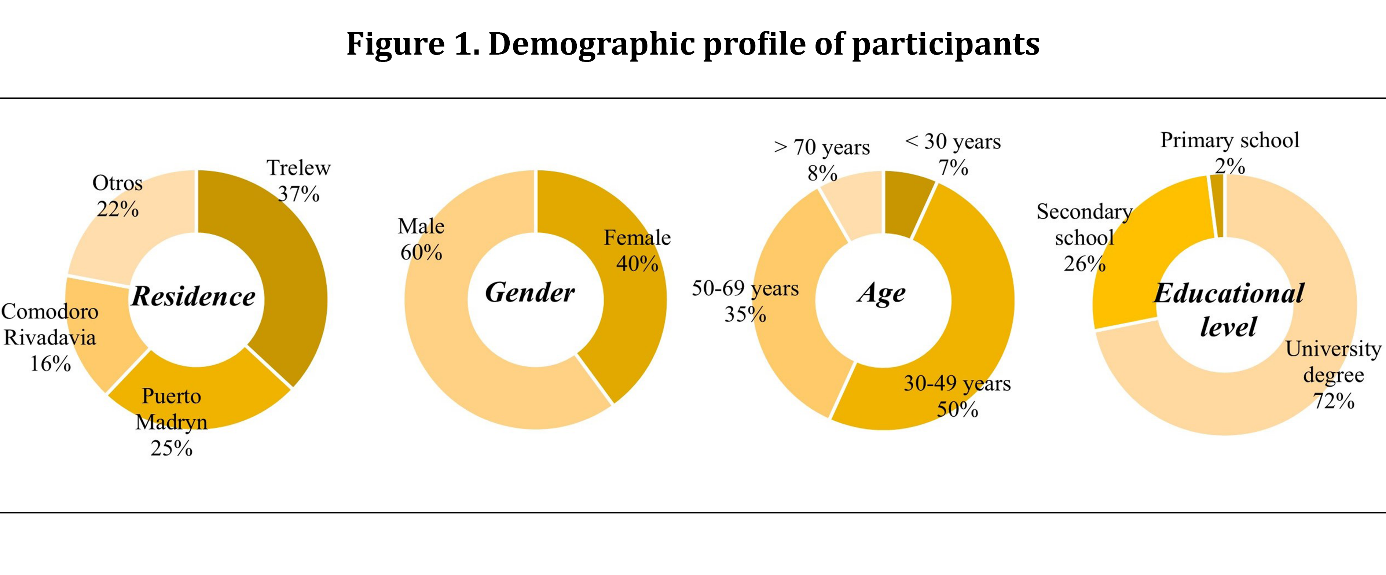
The survey was completed by 134 people in total. The majority of them lived in the Province of Chubut's most populous urban areas, such as Puerto Madryn (25%), Comodoro Rivadavia (16%), and Trelew (37%), along with other places like Puerto San Julián, Rawson, and Puerto Pirámides. Men made up 60% of the responses, while women made up the remaining participants. The bulk of responders were between the ages of 30 and 65, however the age spread was wide (Figure 1).
With 72% of participants having earned a university degree or now engaged in higher education, the sample surveyed demonstrated a rather high educational level. This educational profile is in line with the exploratory aspect of the study, even though it is not entirely typical of the region's general population, which restricts direct extrapolation of the results. Furthermore, early public conversations and policy debates about developing energy technology may be especially pertinent to this demographic. In this way, the findings provide insightful information about how a knowledgeable local population views green hydrogen, which may have an impact on the early phases of societal acceptance and decision-making.
3.2 General knowledge and acceptance
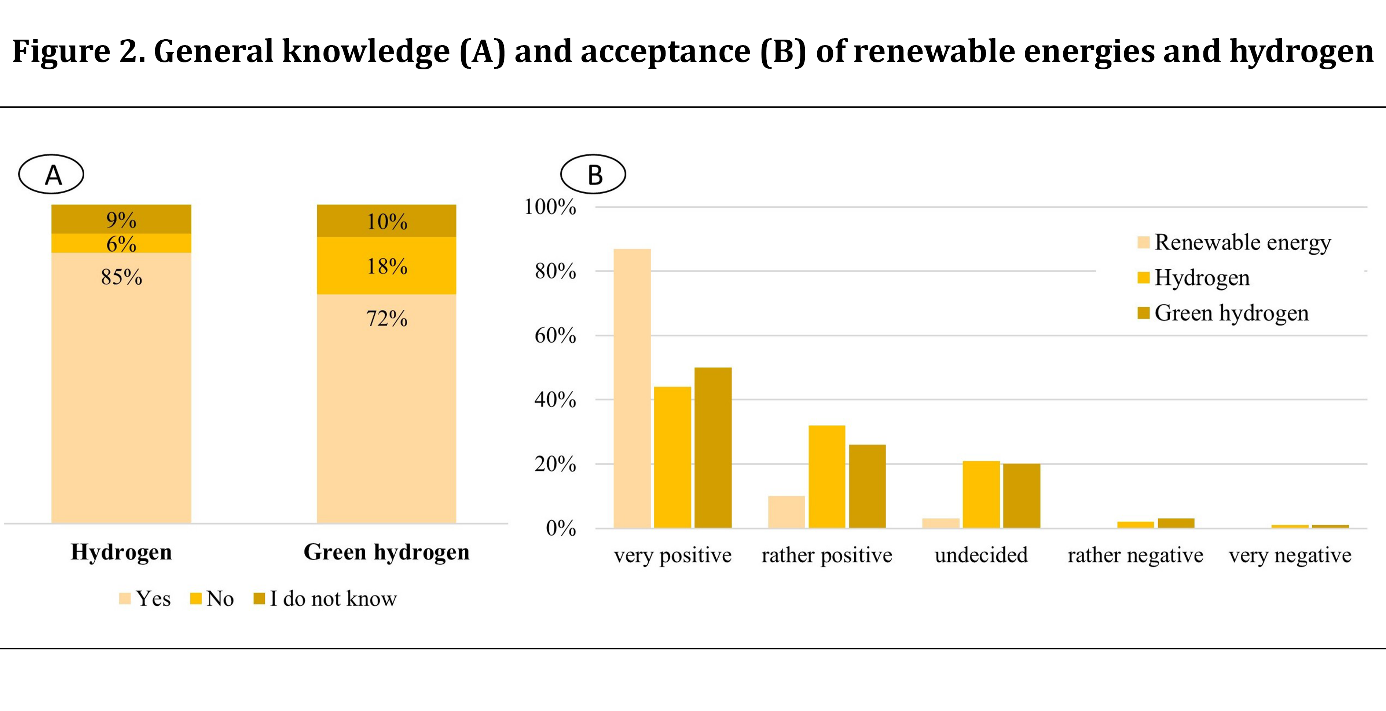
The overall knowledge and opinions of respondents about renewable energy, hydrogen in general, and green hydrogen in particular are depicted in Figure 2. According to the findings, the vast majority of participants have positive opinions about renewable energy sources (87%), are aware that hydrogen is a viable energy source (85%), and are familiar with green hydrogen (72%). These technologies are generally regarded favorably, suggesting that the community polled has a high degree of early-stage societal acceptance. About one-fifth of respondents indicated neutral or unsure attitudes, especially with regard to hydrogen technologies, whereas negative evaluations were negligible (less than 5%).
There was no discernible pattern of severe opposition, despite the fact that adoption of hydrogen-related technologies was marginally lower than that of renewable energies generally. This could be explained by the fact that, in comparison to more well-established renewable technologies like wind or solar energy, green hydrogen is still relatively unknown to a portion of the population and is still in its early stages of public diffusion (Zimmer & Welke, 2012; Häußermann et al., 2023).
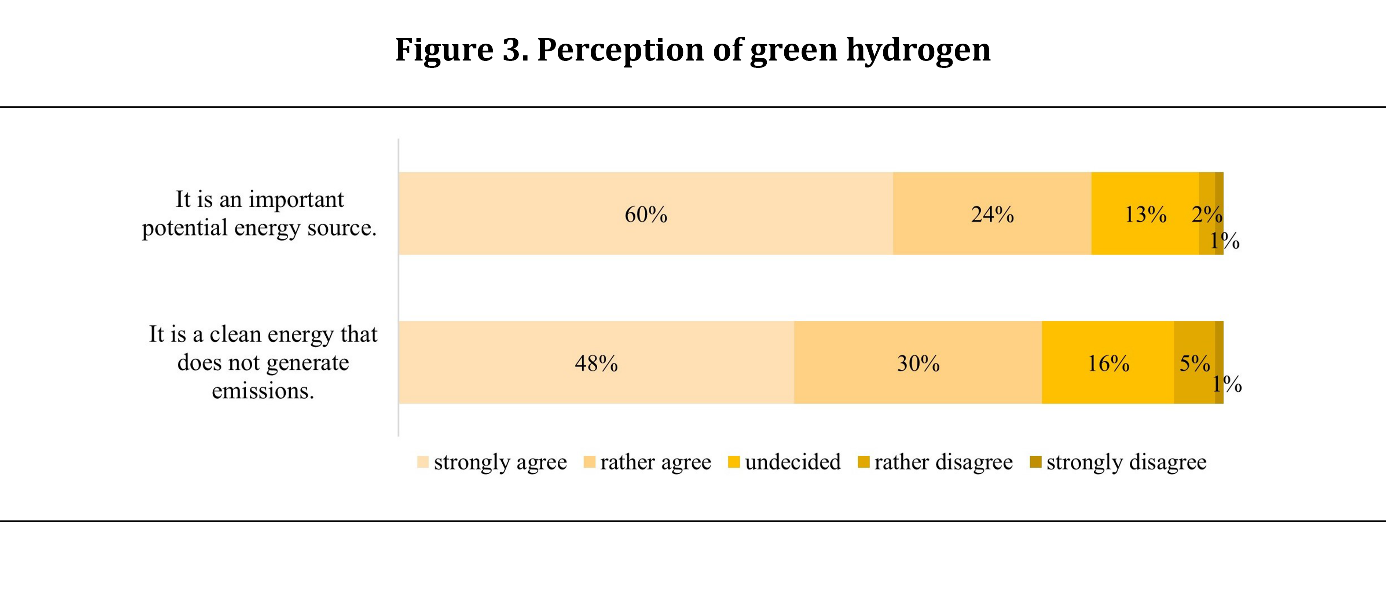
Similarly, as shown in Figure 3, most respondents agreed or strongly agreed that green hydrogen represents an important potential energy source (84%) and that it constitutes a clean energy that does not generate pollutant emissions (78%). Neutral responses (around 15%) likely reflect uncertainty or limited information rather than explicit rejection.
Taken together, these findings indicate a generally positive perception of green hydrogen and a favorable context for early-stage social acceptance in the study region. However, this perception should be interpreted with caution, as it may be influenced by the educational profile of the sample respondents. The high proportion of respondents with higher educational attainment may facilitate greater exposure to messages on energy transition and climate change, informing more favorable attitudes toward emerging technologies. Consequently, perceptions among more heterogeneous social groups
may differ.
Similar patterns have been reported in other contexts where emerging energy technologies tend to be positively perceived when framed within narratives of environmental protection, development, and technological modernization, particularly among urban and educated populations (Zhao & Ravn Nielsen, 2018; Ingaldi & Klimecka-Tatar, 2020). Nonetheless, previous studies suggest that such initial acceptance often precedes more critical debates on territorial impacts and governance as projects move toward implementation, particularly once concrete projects, land-use changes, or distributional impacts become visible.
3.3 Social concerns
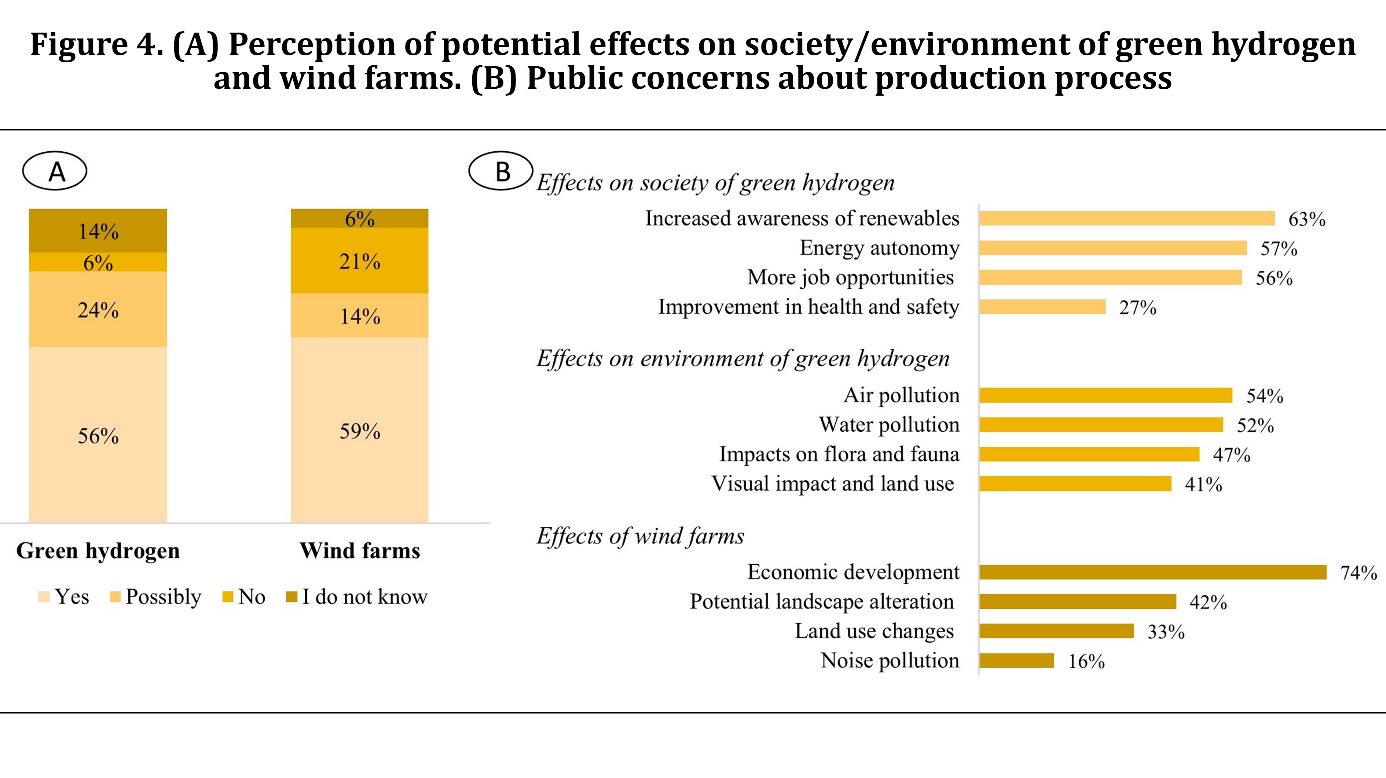
Figure 4 presents respondents’ perceptions regarding potential societal and environmental effects associated with green hydrogen production and wind farms. Most participants (80%) indicated that green hydrogen production could generate social and environmental effects (responding «yes» or «maybe»). The most frequently mentioned perceived benefits were increased awareness of renewable energies, greater energy autonomy, and job creation (63%, 57%, and 56%, respectively). Potential health and safety improvements were mentioned less frequently (27%).
Regarding environmental aspects, concerns primarily related to potential impacts on air and water quality and on flora and fauna (approximately 50%), followed by visual impacts and land use (41%). A smaller proportion of respondents (14%) reported limited familiarity with green hydrogen, indicating persistent informational gaps.
In relation to wind farms, 73% of respondents indicated that their implementation could entail local effects, with economic development emerging as the most frequently cited benefit (74%). Concerns related to changes to the landscape (42%), land use changes (33%), and noise (16%) were reported less frequently.
Notably, safety-related concerns commonly emphasized in studies on hydrogen technologies, such as explosion risks, were largely absent in this study (Ricci et al., 2008; Emmerich et al., 2020; Baur et al., 2022). This may be partly explained by the characteristics of the survey’s sample, as higher educational attainment and prior familiarity with renewable energy concepts have been associated with lower perceived technological risk, particularly in early, non-site-specific stages of project discussion (Emmerich et al., 2020; Häußermann et al., 2023), and should not be interpreted as evidence that safety issues would remain marginal in later stages of project development.
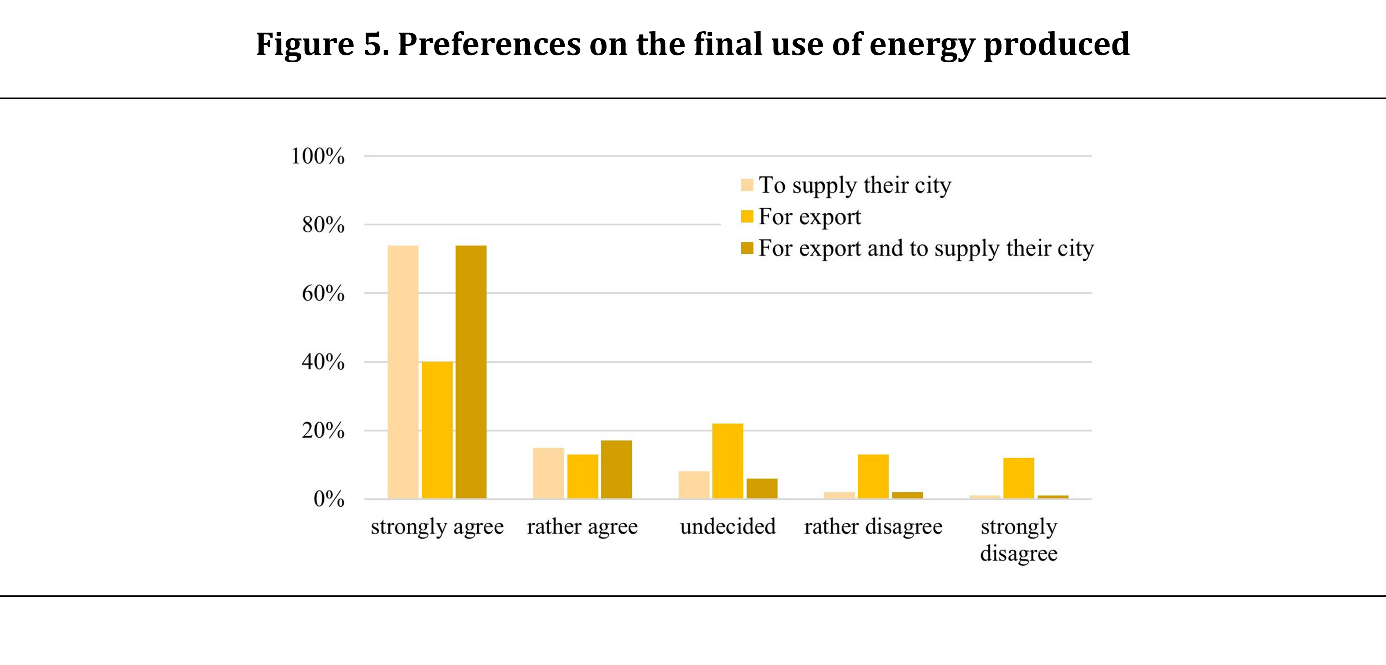
Figure 5 shows respondents’ preferences regarding the final use of the energy produced near their place of residence. Approximately 90% supported prioritizing local supply, even if part of the production is exported, while exclusive export-oriented use received notably lower levels of support.
Overall, the concerns and expectations identified in this study appear to be driven more by anticipated regional development benefits and energy autonomy than by direct experience with infrastructure-related impacts, highlighting the relevance of social perception studies in early policy and planning stages. Similar dynamics have been reported in international studies on emerging energy technologies, where social acceptance is closely linked to expectations of local benefits and fair distribution of outcomes (Kavanagh, 2017; Zhao & Ravn Nielsen, 2018). In Latin America, these expectations are often embedded in broader territorial and socio-environmental narratives surrounding energy transitions and development, as discussed by Svampa (2019), reinforcing the importance of addressing local priorities from the early stages of energy planning. In this sense, recent analyses on green hydrogen in the region emphasize its framing as both a decarbonization strategy and a development opportunity (Aranibar Ramos & Olarte Pacco, 2024).
3.4 Correlation between variables
To examine the relationships between knowledge of green hydrogen and public attitudes or concerns, correlation analyses were performed using statistical tests selected according to the nature of the variables. For nominal variables, Pearson’s Chi-square test was applied, with the null hypothesis stating that no association exists between the variables. When the significance level was below the 5% threshold, the null hypothesis was rejected and the Pearson contingency coefficient was used to estimate the strength of the association, ranging from 0 (no association) to 1 (strong association) (Schober et al., 2018). For ordinal variables, Spearman’s rank correlation coefficient (rs) was employed to assess both the direction and strength of the association (Schober et al., 2018).
To explore the relationship between awareness of green hydrogen and perceived societal and environmental implications, three tests were conducted.
Test 1 analyzed the association between the variables «aware of green hydrogen» and «considers that green hydrogen may have effects on society». As both variables are nominal, Pearson’s Chi-square test was applied. The results yielded a significance value of 0.010 (< 0.05) and a contingency coefficient of 0.427, indicating a moderate association between awareness of green hydrogen and perceptions of societal effects.
Test 2 examined the relationship between «aware of green hydrogen» and «considers that green hydrogen may have effects on the environment». The Chi-square test produced a significance value of 0.002 and a contingency coefficient of 0.460, also indicating a moderate association between the variables.
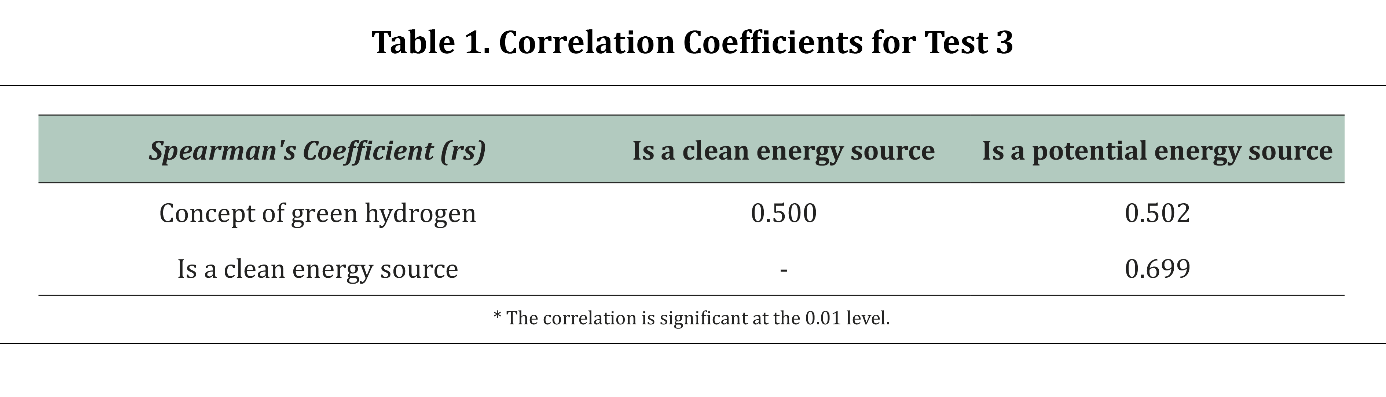
Test 3 focused on the relationships among the ordinal variables «concept of green hydrogen», «green hydrogen is a clean energy that does not generate emissions», and «green hydrogen is potentially an important energy source». Spearman’s correlation analysis (Table 1) revealed statistically significant positive associations (p < 0.05) across all variable pairs. In practical terms, respondents who held a more positive overall concept of green hydrogen were more likely to perceive it as both a clean energy option and a relevant potential energy source, with correlation strengths ranging from
moderate to strong.
Taken together, these results highlight the value of public acceptance surveys, even when applied to individuals without direct experience with a specific energy technology. Although the term “green hydrogen” has not yet fully entered the broader societal vocabulary, the surveyed population demonstrates a general openness toward hydrogen technologies, largely associated with their perceived contribution to environmental protection (Zimmer & Welke, 2012; Häußermann et al., 2023). In contrast, safety-related issues (often emphasized in expert-driven assessments) do not appear to constitute a decisive factor influencing acceptance in this study (Ricci et al., 2008). Consistent with previous research, these findings underscore the importance of environmental awareness as a key driver of acceptance for emerging hydrogen technologies (Emmerich et al., 2020; Häußermann et al., 2023).
From a practical perspective, the observed correlations suggest that greater familiarity with green hydrogen is associated with more favorable attitudes toward its perceived societal and environmental implications. This highlights the relevance of information provision and awareness-raising strategies during early stages of project planning, particularly in contexts where large-scale hydrogen deployment remains prospective.
3.5 Limitations and avenues for future research
This study has several limitations that should be acknowledged. The most relevant limitation concerns the educational profile of the surveyed sample, as 72% of respondents have completed or are currently pursuing university studies. This overrepresentation may influence the observed perceptions, particularly the strong association of green hydrogen with the notion of a “clean energy source”, a concept widely disseminated in academic, technical, and policy-oriented discourses.
Higher educational attainment is often associated with greater access to information on climate change, decarbonization strategies, and renewable energy technologies, which may foster more favorable attitudes toward emerging energy solutions. Consequently, the findings should be interpreted as representative of a specific social segment rather than of the broader population, where perceptions may be more heterogeneous and potentially shaped by concerns related to local resources, livelihoods, or access to services.
Another limitation relates to the prospective nature of green hydrogen development in the study region. As the survey was conducted in a pre-implementation context, the results reflect expectations and anticipatory perceptions rather than responses grounded in direct experience with infrastructure projects.
Future research should aim to include more heterogeneous and representative samples and to incorporate qualitative approaches, such as interviews or focus groups, to better capture how perceptions are constructed across different social groups. In addition, further studies could explore how public perceptions interact with local and national policy frameworks, particularly regarding decisions on the final use of energy (for export or local consumption) which emerged as a relevant concern among respondents.
4. Conclusions
This study analyzed social perceptions of green hydrogen production from wind energy in Argentine Patagonia and examined the relationships between knowledge and acceptance variables. The results indicate that, within the surveyed population, green hydrogen is largely associated with the idea of clean energy and is generally perceived favorably.
Social acceptance emerges as a relevant factor in the early stages of energy planning, as public perceptions may influence future political support and investment decisions. Although green hydrogen remains less well-known than other renewable energy technologies, respondents predominantly emphasized expected benefits related to economic development, job creation, increased awareness of renewable energies, and energy autonomy. This is consistent with the strong preference for prioritizing local energy supply over exclusively export-oriented uses.
These findings should be interpreted with caution, given the exploratory nature of the study and the high proportion of respondents with higher educational attainment, which may contribute to more favorable perceptions. Nevertheless, the results provide valuable initial insights into social acceptance dynamics in a region of the Global South with significant strategic potential for green hydrogen development. From a policy perspective, the study highlights the importance of integrating social considerations and transparent communication strategies at early stages of energy planning. Further research based on more diverse and representative samples, as well as qualitative approaches, is recommended as green hydrogen initiatives advance in the region, where energy transitions intersect with long-standing territorial and development challenges.
References
Abdalla, A.M., Hossain, S., Nisfindy, O.B., Azad, A.T., Dawood, M., & Azad, A.K. (2018). Hydrogen production, storage, transportation and key challenges with applications: A review. Energy Conversion and Management, 165, 602–627. https://doi.org/10.1016/j.enconman.2018.03.088
Aprea, J.L. & Bolcich, J.C. (2020). The energy transition towards hydrogen utilization for green life and sustainable human development in Patagonia. International Journal of Hydrogen Energy, 45(47), 25627–25645. https://doi.org/10.1016/j.ijhydene.2020.01.246
Aprea, J.L. (2009). Hydrogen energy demonstration plant in Patagonia: Description and safety issues. International Journal of Hydrogen Energy, 34(10), 4684–4691. https://doi.org/10.1016/j.ijhydene.2008.08.044
Aranibar Ramos, E.R., & Olarte Pacco, M.A.D. (2024). Hidrógeno verde: abriendo las puertas a un futuro energético sostenible en el Perú. Revista Kawsaypacha: Sociedad y Medio Ambiente, (13), A-004. https://doi.org/10.18800/kawsaypacha.202401.A004
Armijo, J. & Philibert, C. (2020). Flexible production of green hydrogen and ammonia from variable solar and wind energy: Case study of Chile and Argentina. International Journal of Hydrogen Energy, 45(3), 1541–1558. https://doi.org/10.1016/j.ijhydene.2019.11.028
Baur, D., Emmerich, P., Baumann, M.J., & Weil, M. (2022). Assessing the social acceptance of key technologies for the German energy transition. Energy, Sustainability and Society, 12(1), 4–20. https://doi.org/10.1186/s13705-021-00329-x
Bock, S., & Reimann, B. (2017). Beteiligungsverfahren bei umweltrelevanten Vorhaben. Abschlussbericht. Dessau-Roßlau: Umweltbundesamt. https://www.umweltbundesamt.de/sites/default/files/medien/1410/publikationen/2017-05-09_texte_37-2017_beteiligungsverfahren-umweltvorhaben_kurz.pdf
Boudet, H.S. (2019). Public perceptions of and responses to new energy technologies. Nature Energy, 4(6), 446–455. https://doi.org/10.1038/s41560-019-0399-x
Emmerich, P., Hülemeier, A.G., Jendryczko, D., Baumann, M.J., Weil, M., & Baur, D. (2020). Public acceptance of emerging energy technologies in context of the German energy transition. Energy Policy, 142, 111516. https://doi.org/10.1016/j.enpol.2020.111516
Flachsbarth, F., Wingenbach, M., & Koch, M. (2021). Addressing the effect of social acceptance on the distribution of wind energy plants and the transmission grid in Germany. Energies, 14(16), 4824. https://doi.org/10.3390/en14164824
Gamboa, G. & Munda, G. (2007). The problem of windfarm location: A social multi-criteria evaluation framework. Energy Policy, 35(3), 1564–1583. https://doi.org/10.1016/j.enpol.2006.04.021
Groth, T.M. & Vogt, C.A. (2014). Rural wind farm development: Social, environmental and economic features important to local residents. Renewable Energy, 63, 1–8. https://doi.org/10.1016/j.renene.2013.08.035
Haase, M., Wulf, C., Baumann, M., Rösch, C., Weil, M., Zapp, P., & Naegler, T. (2022). Prospective assessment of energy technologies: a comprehensive approach for sustainability assessment. Energy, Sustainability and Society, 12, e20. https://doi.org/10.1186/s13705-022-00344-6
Häußermann, J.J., Maier, M.J., Kirsch, T.C., Kaiser, S., & Schraudner, M. (2023). Social acceptance of green hydrogen in Germany: building trust through responsible innovation. Energy, Sustainability and Society, 13, e22. https://doi.org/10.1186/s13705-023-00394-4
Heras, J. & Martín, M. (2020). Social issues in the energy transition: Effect on the design of the new power system. Applied Energy, 278, 115654. https://doi.org/10.1016/j.apenergy.2020.115654
Ingaldi, M. & Klimecka-Tatar, D. (2020). People’s attitude to energy from hydrogen—from the Point of View of modern energy technologies and social responsibility. Energies, 13(24), 6495. https://doi.org/10.3390/en13246495
Kavanagh R. (2017). A social impact analysis of hydrogen production in the Orkney Islands based on the water electrolyser. Master thesis, Heriot-Watt University.
Koj, J., Wulf, C., Schreiber, A., & Zapp, P. (2017). Site-dependent environmental impacts of industrial hydrogen production by alkaline water electrolysis. Energies, 10(7), 860. https://doi.org/10.3390/en10070860
Langbroek, M. & Vanclay, F. (2012). Learning from the social impacts associated with initiating a windfarm near the former island of Urk, The Netherlands. Impact Assessment and Project Appraisal, 30(3), 167–178. https://doi.org/10.1080/14615517.2012.706943
Llera-Sastresa, E., Romeo, L.M., Scarpellini, S., & Portillo-Tarragona, P. (2020). Methodology for dimensioning the socio-economic impact of power-to-gas technologies in a circular economy scenario. Applied Sciences, 10(21), 7907. https://doi.org/10.3390/app10217907
Mönnich, K., Neumann, T., Strack, M., Braess, H., & Scheuerer, K. (2004). Large scale hydrogen production from wind energy in Patagonia, Argentina. Wind Engineering, 28(5), 565–575. https://doi.org/10.1260/0309524043028028
Morante, J. R., Andreu, T., García, G., Guilera, J., Tarancón, A., & Torrell, M. (2020). Vector energético de una economía descarbonizada. 2da Ed. Fundación Naturgy.
Osman, A.I., Mehta, N., Elgarahy, A.M., Hefny, M., Al‑Hinai, A., Al‑Muhtaseb, A.H., & Rooney D.W. (2022). Hydrogen production, storage, utilisation and environmental impacts: a review, Environmental Chemistry Letters, 20(1), 153–188. https://doi.org/10.1007/s10311-021-01322-8
Pascualone, M.J., Gómez Costa, M.B., & Dalmasso, P.R. (2019). Fermentative biohydrogen production from a novel combination of vermicompost as inoculum and mild heat-pretreated fruit and vegetable waste. Biofuel Research Journal, 6(3), 1046–1053. https://doi.org/10.18331/brj2019.6.3.5
Ricci, M., Bellaby, P., & Flynn, R. (2008). What do we know about public perceptions and acceptance of hydrogen? A critical review and new case study evidence. International Journal of Hydrogen Energy, 33(21), 5868–5880. https://doi.org/10.1016/j.ijhydene.2008.07.106
Schlör, H., Koj, J., Zapp, P., Schreiber, A., & Hake, J.F. (2017). The social footprint of hydrogen production - A social life cycle assessment (S-LCA) of alkaline water electrolysis. Energy Procedia, 105, 3038–3044. https://doi.org/10.1016/j.egypro.2017.03.626
Schober, P., Boer, C., & Schwarte, L.A. (2018). Correlation coefficients: Appropriate use and interpretation. Anesthesia and Analgesia, 126(5), 1763–1768. https://doi.org/10.1213/ane.0000000000002864
Sharma, S., Agarwal, S., & Jain, A. (2021). Significance of hydrogen as economic and environmentally friendly fuel. Energies, 14(21), 7389. https://doi.org/10.3390/en14217389
Shiva Kumar, S. & Himabindu, V. (2019). Hydrogen production by PEM water electrolysis – A review. Materials Science for Energy Technologies, 2(3), 442–454. https://doi.org/10.1016/j.mset.2019.03.002
Sigal, A., Leiva, E.P.M., & Rodríguez, C.R. (2014). Assessment of the potential for hydrogen production from renewable resources in Argentina. International Journal of Hydrogen Energy, 39(16), 8204–8214. https://doi.org/10.1016/j.ijhydene.2014.03.157
Singla, M.K., Nijhawan, P., & Oberoi, A.S. (2021). Hydrogen fuel and fuel cell technology for cleaner future: a review. Environmental Science and Pollution Research International, 28(13), 15607–15626. https://doi.org/10.1007/s11356-020-12231-8
Svampa, M. (2019). Las fronteras del neoextractivismo en América Latina: Conflictos socioambientales, giro ecoterritorial y nuevas dependencias. CALAS.
Takach, M., Sarajlic, M., Peters, D., Kroener, M., Schuldt, F., & von Maydell, K. (2022). Review of hydrogen production techniques from water using renewable energy sources and its storage in salt caverns. Energies, 15(4), 1415. https://doi.org/10.3390/en15041415
Westrom, M. (2020). Winds of change: Legitimacy, withdrawal, and interdependency from a decentralized wind-to-hydrogen regime in Orkney, Scotland. Energy Research and Social Science, 60, 101332. https://doi.org/10.1016/j.erss.2019.101332
You, C., Kwon, H., & Kim, J. (2020). Economic, environmental, and social impacts of the hydrogen supply system combining wind power and natural gas. International Journal of Hydrogen Energy, 45(46), 24159–24173. https://doi.org/10.1016/j.ijhydene.2020.06.095
Yu, T., Behm, H., Bill, R., & Kang, J. (2017). Audio-visual perception of new wind Parks. Landscape and Urban Planning, 165, 1–10. https://doi.org/10.1016/j.landurbplan.2017.04.012
Yun, Y.M., Lee, M.K., Im, S.W., Marone, A., Trably, E., Shin, S.R., Kim, M.G., Cho, S.K., & Kim, D.H. (2018). Biohydrogen production from food waste: Current status, limitations, and future perspectives. Bioresource Technology, 248, 79–87. https://doi.org/10.1016/j.biortech.2017.06.107
Zhang, Z., Douziech, M., Perez-Lopez, P., Wang, Q., & Yang, Q. (2022). Identify parameters hindering renewable hydrogen production in France: Life cycle sensitivity and uncertainty analysis. E3S Web of Conferences, 350, 01021. https://doi.org/10.1051/e3sconf/202235001021
Zhao, G. & Ravn Nielsen, E. (2018). Social impact assessment of BIG HIT: A report into the societal impact of the project. Department of Energy Conversion and Storage, Technical University of Denmark. https://orbit.dtu.dk/en/publications/social-impact-assessment-of-big-hit-a-report-into-the-societal-im
Zimmer, R., & Welke, J. (2012). Let’s go green with hydrogen! The general public’s perspective. International Journal of Hydrogen Energy, 37(22), 17502–17508. https://doi.org/10.1016/j.ijhydene.2012.02.126
Acknowledgments The authors wish to acknowledge the financial support of CIQA-UTN from Córdoba, Argentina. R.E. acknowledges the fellowship from UTN, Argentina. Furthermore, the authors extend their gratitude to the anonymous survey participants and to everyone who assisted in distributing the questionnaire. |
Declaration of Artificial Inteligence use The authors used ChatGPT (OpenAI) exclusively as a language support tool during the revision and editing process of the manuscript, particularly for improving grammar, style, and clarity of expression. All scientific content, interpretations, analyses, and conclusions are the sole responsibility of the authors. Declaration of potential conflicts of interest The authors declare that they have no conflict of interest. Role of each author in the research according to the classification (CRediT)
Validation, Writing-Reviewing and Editing, Visualization, Supervision |
Chemical engineer with an MSc in Regional Science and Environmental Impact from the Universidad Tecnológica Nacional, Facultad Regional Córdoba, Argentina, obtained through a dual-degree program in collaboration with the Karlsruhe Institute of Technology, Germany. Her research focuses on regional analyses of the social and environmental impacts of emerging energy sources.
|
Ph.D. in Chemical Engineering. She is an associate professor and researcher at the Universidad Tecnológica Nacional in Córdoba, Argentina, where she currently leads the Microbiology Laboratory at the Research and Transfer Center for Environmental Chemical Engineering (CIQA). Her research interests include environmental biotechnology and renewable energy.
|
Revista Kawsaypacha: Sociedad y Medio Ambiente.
N° 17 enero – junio 2026. E-ISSN: 2709 – 3689
| How to Cite: Etcheguia, R., & Pascualone, M. J. Social Perception of Green Hydrogen Production in Patagonia, Argentina. Revista Kawsaypacha: Sociedad Y Medio Ambiente, (17), A-009. https://doi.org/10.18800/kawsaypacha.202601.A009 | |