
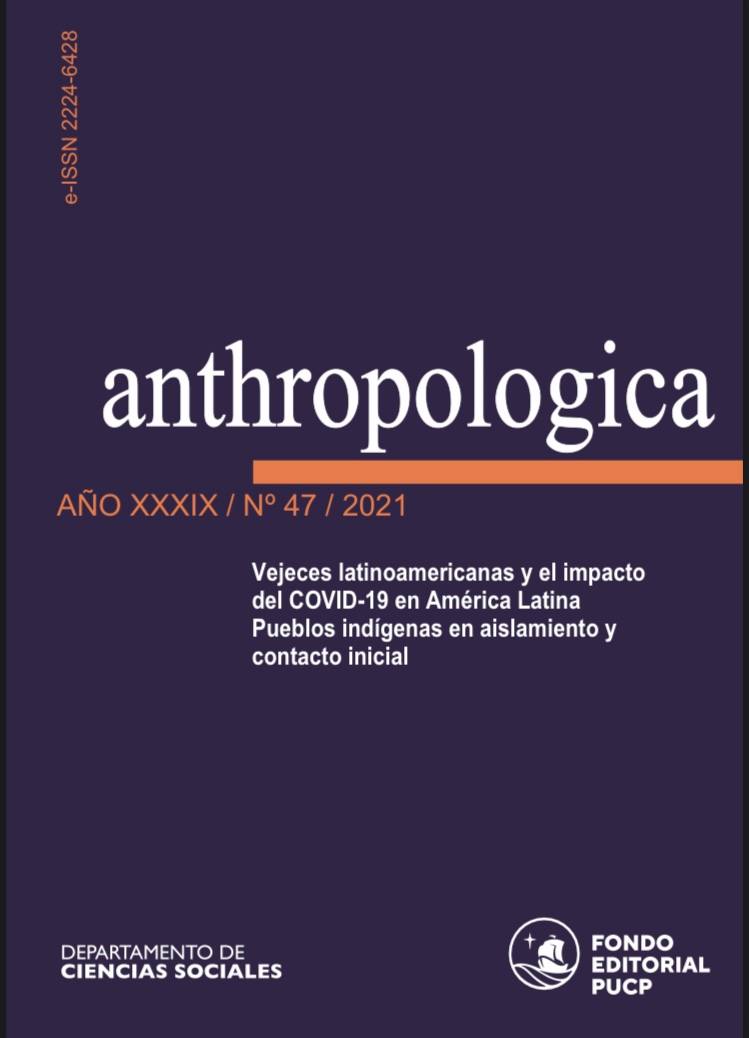
Pandemic, aging and public policies in Latin America. Theoretical notes to think about the problem of unequal old age from the perspec- tives of the life course and the political economy of aging
DOI:
https://doi.org/10.18800/anthropologica.202102.006Keywords:
aging, unequal old age, public and social policiesAbstract
The pandemic caused by the SARS-CoV-2 coronavirus highlighted the diversity and inequality among older people in Latin American countries. From what theoretical frameworks is it possible to undertake its analysis? How to do it from the specificities of the region? What is the role played by the State and public and social policies? This article arises from the conviction that it is necessary to review the analytical frameworks used to understand aging. It is proposed to problematize unequal old age by reviewing and articulating some theoretical premises of two approaches, that of the life course and that of the political economy of aging. It is argued that these allow a better grasp of the complexity of social reality, nurturing more accurate diagnoses about the situation and problems of the elderly in the region, which can serve as a starting point for the design of new policies and to question the potentialities and limits of existing ones.
Downloads
Downloads
Published
How to Cite
Issue
Section
License
Copyright (c) 2021 Sofía Clarisa Marzioni

This work is licensed under a Creative Commons Attribution-NonCommercial 4.0 International License.


