
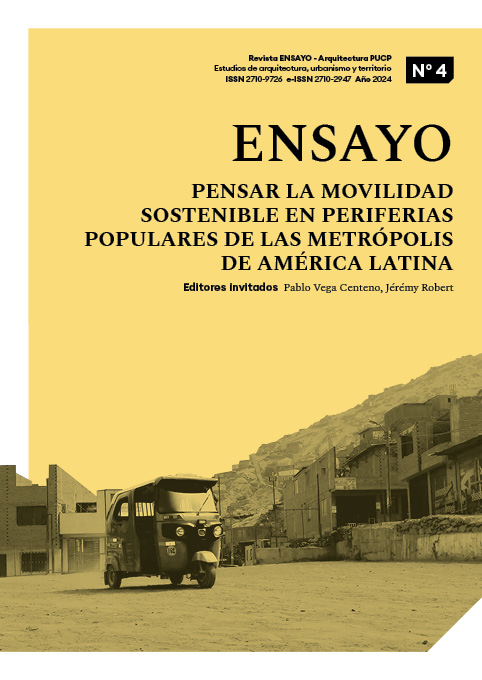
El transporte del pueblo: los mototaxis y la movilidad cotidiana en Lima
DOI:
https://doi.org/10.18800/ensayo.202404.005Palabras clave:
Mototaxis, Movilidad cotidiana, Transporte popular, Espacio urbano, LimaResumen
Hay cientos de miles de mototaxistas en Lima, y ellos son vitales para la movilidad cotidiana en gran parte de la ciudad. Mientras tanto, muchas autoridades los sindican como una amenaza para el «progreso» y el «orden formal». Este artículo parte de esa tensión, para intentar comprender la economía del mototaxi, la movilidad cotidiana y la planificación del transporte en Lima Metropolitana. El artículo comienza destacando las formas en que los mototaxistas conectan el tejido urbano y crean espacios. Luego analiza los esfuerzos de las autoridades para regular estrictamente a los mototaxistas, situándolos dentro de la guerra más generalizada de las autoridades contra la «informalidad». A modo de un correctivo frente a las posturas normativas de las autoridades sobre cómo deben trasladarse las personas por la ciudad, este artículo plantea que, en lugar de caracterizar los mototaxis y otros modos de transporte como «informales», debemos entenderlos como formas de transporte populares.
Descargas
Descargas
Publicado
Cómo citar
Número
Sección
Licencia

Esta obra está bajo una licencia internacional Creative Commons Atribución-NoComercial-CompartirIgual 4.0.