

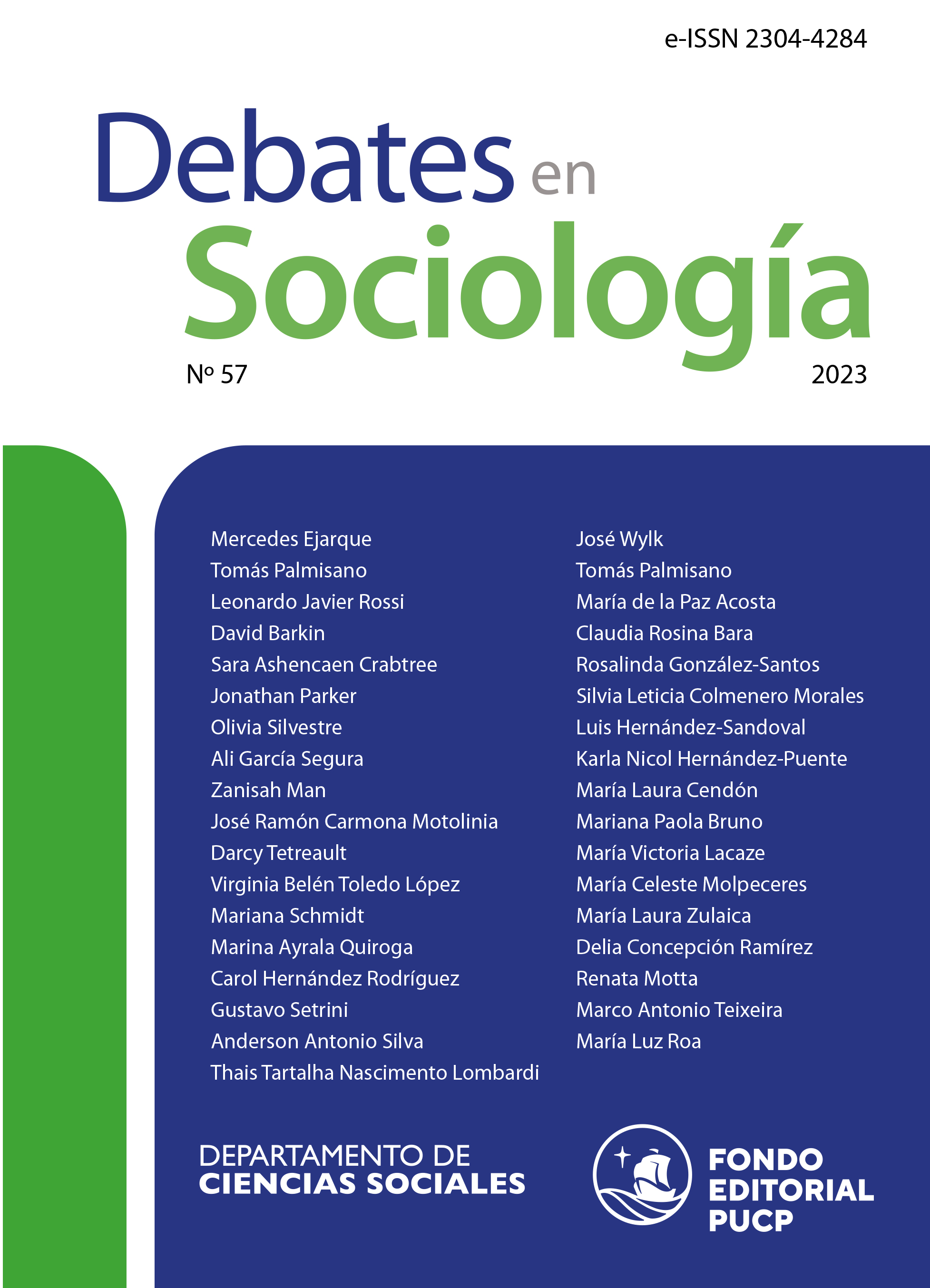
El metabolismo social de la comunalidad reconfigurada en Milpa Alta
DOI:
https://doi.org/10.18800/debatesensociologia.202302.004Palabras clave:
Comunalidad reconfigurada, Metabolismo social, Pueblos originarios, Milpa Alta, Ciudad de MéxicoResumen
Con base en un análisis de las luchas de los pueblos originarios nahuas de Milpa Alta en la Ciudad de México, este artículo aborda la siguiente pregunta: ¿Cómo ha sido posible conservar grandes extensiones de bosque y tierras agrícolas en una demarcación que forma parte de una de las ciudades más grandes del mundo, en rápida expansión desde mediados del siglo pasado? La explicación articula dos categorías clave: la comunalidad reconfigurada en Milpa Alta por medio de luchas históricas que siguen desenvolviéndose hasta la fecha; y el metabolismo social de los intercambios humano-naturaleza mediados por el trabajo de diversas agencias, cuyos proyectos entran en conflicto en distintos momentos. Argumentamos que la recreación de formas de organización y prácticas colectivas indígenas han permitido frenar la extracción de materias primas (madera y agua) y el cambio de uso de suelo para proyectos de desarrollo impulsados por agencias gubernamentales y compañías privadas; además de contribuir a la conservación de prácticas agrícolas de escala pequeña. El análisis se basa en entrevistas semiestructuradas que se realizaron entre 2016 y 2020 con habitantes de Milpa Alta y en una revisión sistemática de fuentes bibliográficas, hemerográficas, estadísticas y documentos en línea.
Descargas


2.png)

