

«Son prácticamente casos perdidos». Trata de personas y respuesta judicial en Madre de Dios, Perú
DOI:
https://doi.org/10.18800/debatesensociologia.201802.003Palavras-chave:
criminalización, experiencia social, pruebas, selectividad penal, trata de personasResumo
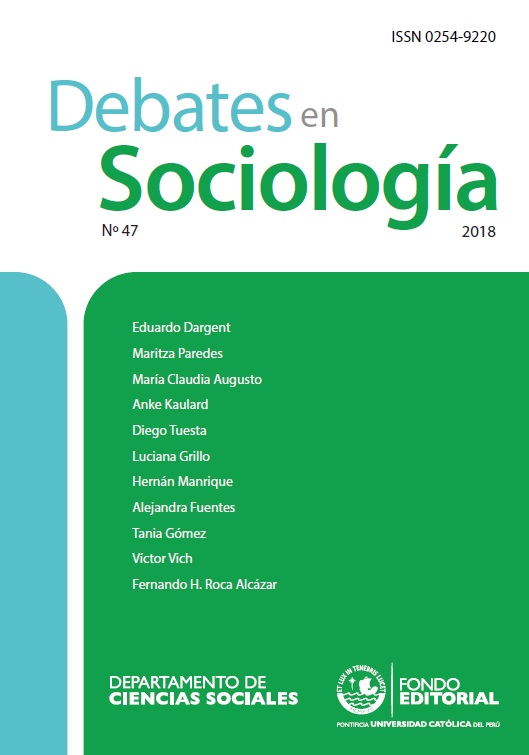
La literatura empírica sobre judicialización de la trata de personas es relativamente escasa en Sudamérica. El artículo aporta evidencia sobre diligencias judiciales contra este delito en Madre de Dios, región emblemática de minería artesanal en Perú. Demuestro que la actuación fiscal obedece a un conjunto de lógicas de acción, en contraste con narrativas que la interpretan como resultado de elecciones racionales. Dicha constatación permite abordar el problema de la selectividad penal, o por qué los fiscales priorizan algunos casos en vez de otros. Si bien la discrecionalidad que estos actores disponen es un importante para explicarla, existen factores poco discutidos —por ejemplo, la cultura organizacional de los grupos profesionales que conforman el sistema de justicia— que influirían también en dicho comportamiento. Esta exploración permite promover algunas categorías novedosas en la sociología del derecho.
Downloads
Downloads
Publicado
Como Citar
Edição
Seção
Licença

Este trabalho está licenciado sob uma licença Creative Commons Attribution 4.0 International License.

2.png)

