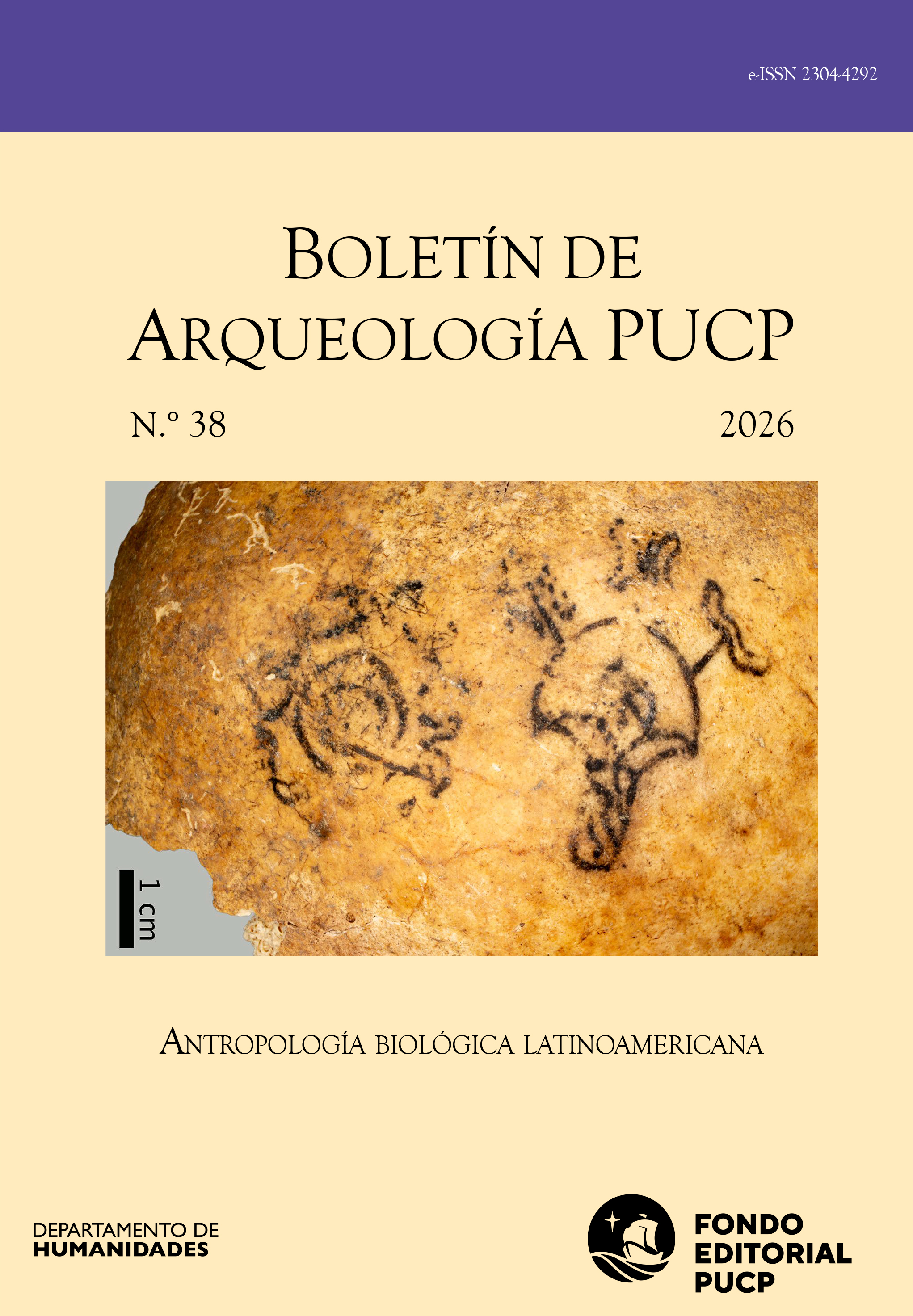

Osteobiography of a painted cranium from a temple dedicated to Xipe Tótec in Tehuacan, Puebla, Mexico
DOI:
https://doi.org/10.18800/boletindearqueologiapucp.202601.003Keywords:
Postsacrificial treatments, Postclassic, Decorated bones, Xipe Tótec, Tehuacán, MesoamericaAbstract
Human bones were used in Mesoamerica as work tools, weapons, and votive and religious paraphernalia. The bones of sacrificed individuals however had an additional symbolic value related to the sacrificial act itself. Painted crania seem to have been common but the evidence for recovered specimens in archaeological contexts is scant. This case study presents the results derived from the osteobiographic analysis of an ossuary found in 2015 at Tehuacán, Puebla, south of a structure in one of the sacrificial altars in front of the temple dedicated to Xipe Tótec, a deity associated with fertility, the renewal of agricultural cycles, and war. This study, which is supplemented with archaeometric and iconographic analyses, presents new evidence regarding painted human bones and their role in sacrificial rituals, thus contributing to the discussion regarding their materiality and symbolism in Mesoamerica.
Downloads