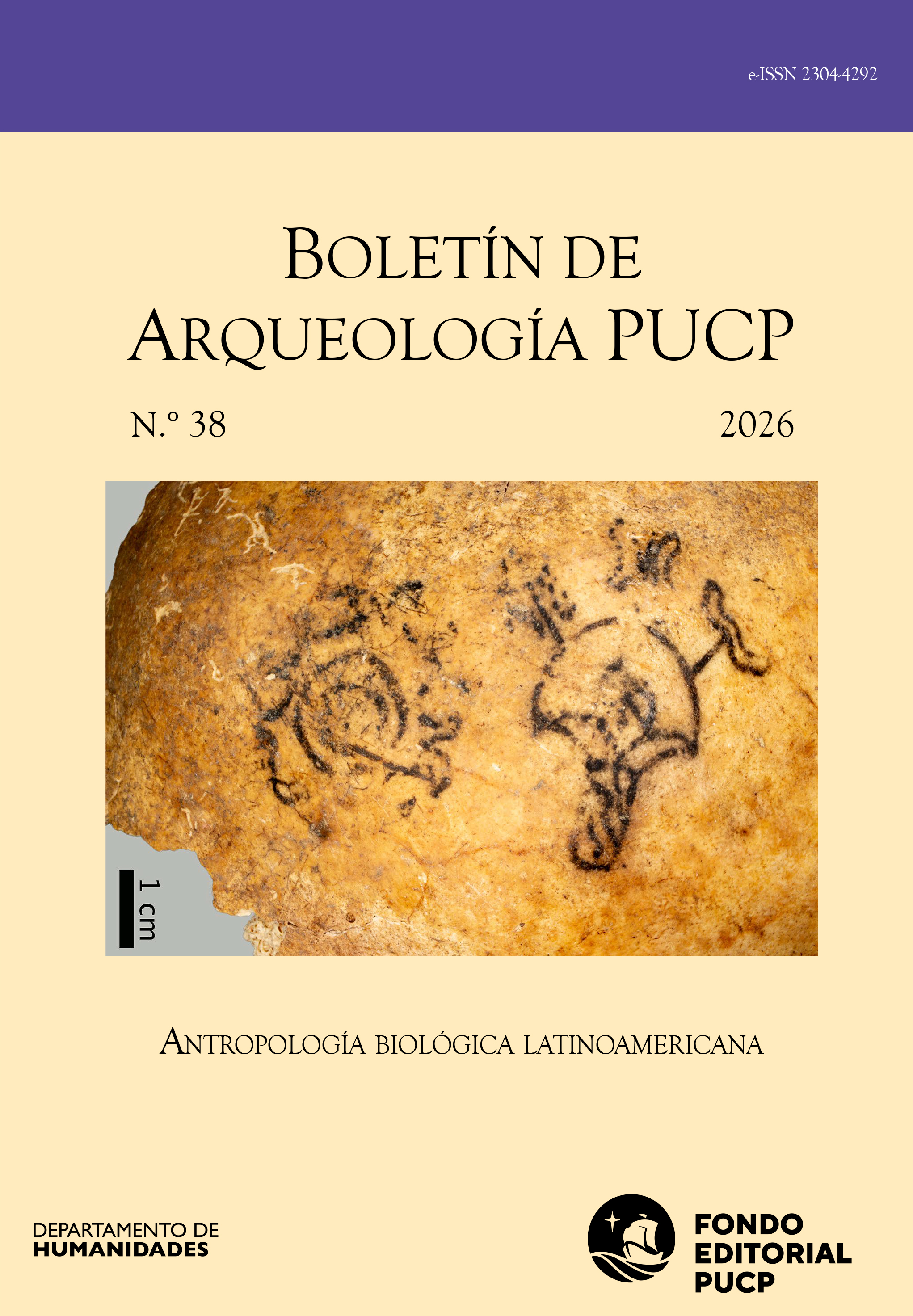

Human remains from the archaeological site of San Enrique (Loventué, La Pampa, Argentina). Taphonomic agents and mortuary practices
DOI:
https://doi.org/10.18800/boletindearqueologiapucp.202601.002Keywords:
Hunter-gatherers, Secondary burials, Taphonomic agents, Mortuary treatment, Archaeological rescueAbstract
This research paper presents the bioarchaeological analysis of human skeletal remains derived from rescue excavations undertaken at the site of San Enrique (Loventué, La Pampa), a burial area that dates to the Late Holocene. The study focuses particularly on the taphonomic agents that affected the assemblage. In total, 273 bone elements in all were identified with various types of natural and anthropic alterations, which comprise 39.2 % of the sample (n=696). Marks left by plant roots and animal activity were identified amongst the former, whilst the latter include cut marks compatible with disarticulation, skinning and pounding procedures. We infer from the bioarchaeological analysis and the arrangement of the various skeletal parts that these remains comprise a multiple secondary burial wherein four subadult and three adult individuals were interred, in mostly disarticulated condition and juxtaposed. Besides the bioturbation processes, some of the remains were also affected by disinternment, weathering and redepositing. The anthropic marks identified allow us to infer processes of post mortem manipulation of the bodies that are typical of secondary burials, a type that has already been recorded in other sites in the provinces of La Pampa and Buenos Aires.
Downloads